
Day 1: Arrival to Riyadh
Arrival to Riyadh
Today we will be welcoming you at the airport as our representative will be waiting for you holding a sign with your name , we will be taking you to your hotel where you can rest for a bit.
Welcome to Riyadh, the birthplace of modern Saudi Arabia, where old-world charm meets 21st-century vision. Riyadh Province – also known as Al-Wosta – is home to the country’s capital: a modern metropolis with a thriving financial and business centre, and a growing cultural scene. It’s a city rich in history, boasting myriad forts, palaces and museums, and some of the country’s most colorful souks.
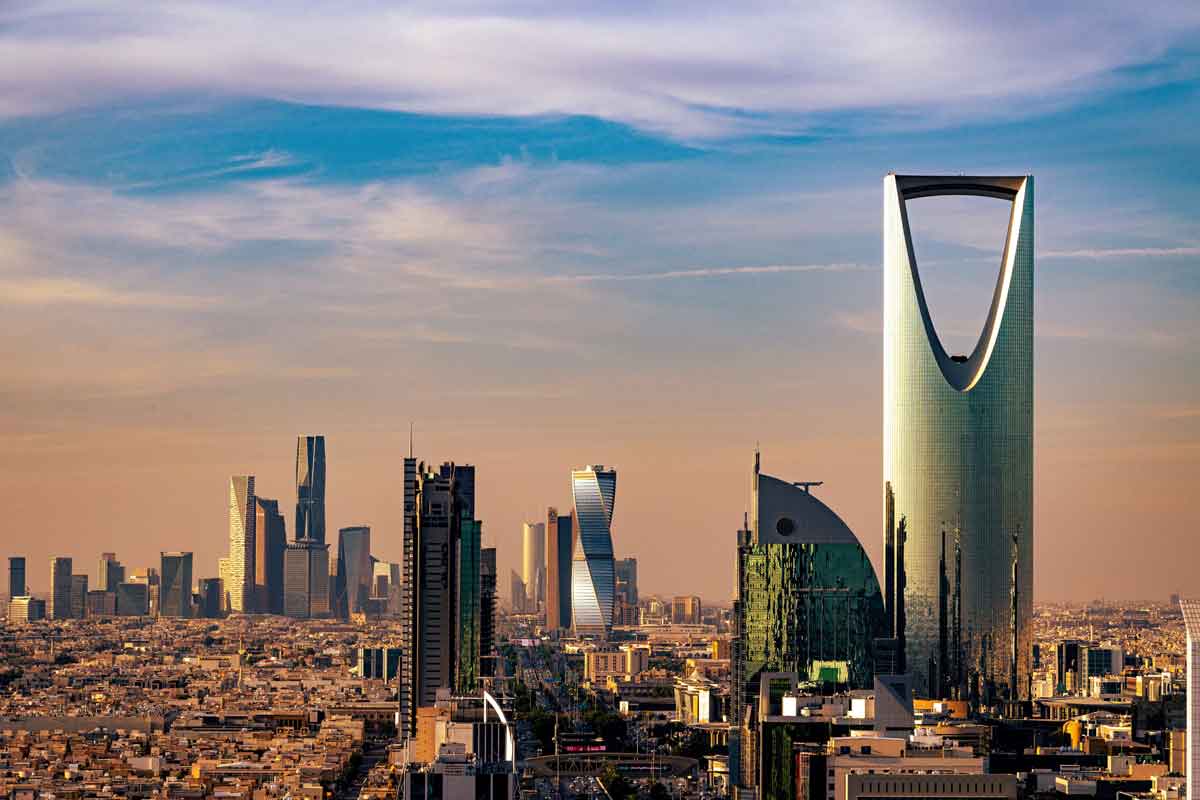
Transfer to the hotel
Riyadh city tour – Al Masmak – National museum
Today we will start with at Al Masmak Fortress ,surrounded by sand, this squat fortification was built around 1865 and is like a scene out of the movies: a big fortress representing an empire. It was the site of a daring 1902 raid by Ibn Saud, during which a spear was hurled at the main entrance door with such force that the head is still lodged in the doorway. Highlights among the exhibits include maps and fascinating photographs of Saudi Arabia dating from 1912 to 1937, in galleries converted from diwans (living rooms). The roofs are covered with painted palm-tree, taramic and ethel wood and exude an old-world charm that evokes an Arabian painting. Inside, the information panels and short, chest-thumping films on the storming of the fortress and the ‘reunification’ of Saudi Arabia are reverential towards the Al Sauds but worth watching nonetheless.
In the same area and only in walking distance we will find our self in Souq Al-Zal which is one of the oldest traditional market. They sell traditional dresses, antiques, Oud ” Arabic perfume” and jewelry
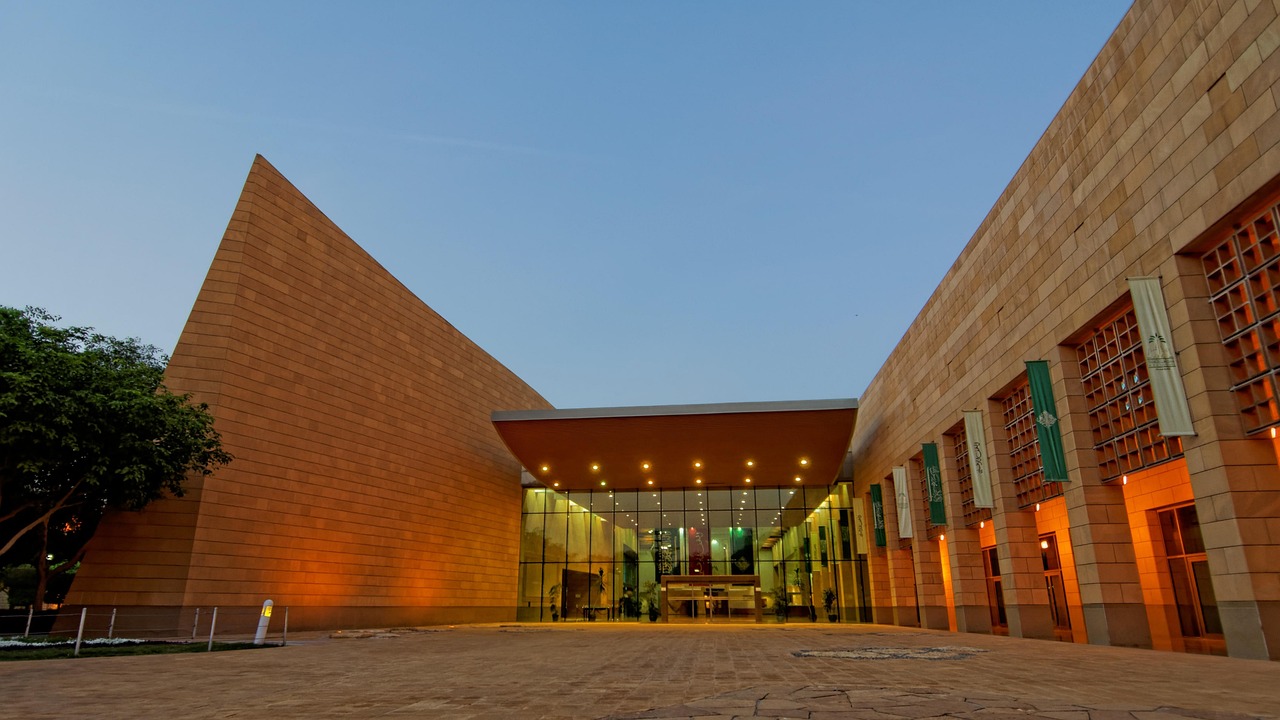
Next on we will move to the National museum you will be discovering Saudi Arabia’s rich past is an amazing journey that would bring you along thousands of kilometers around the whole Kingdom. An easier way to have an insight of Saudi Arabia’s rich History is to visit the King Abdulaziz Historical Center in Riyadh where artifacts from all periods are exhibited and with explanations about their historical significance.
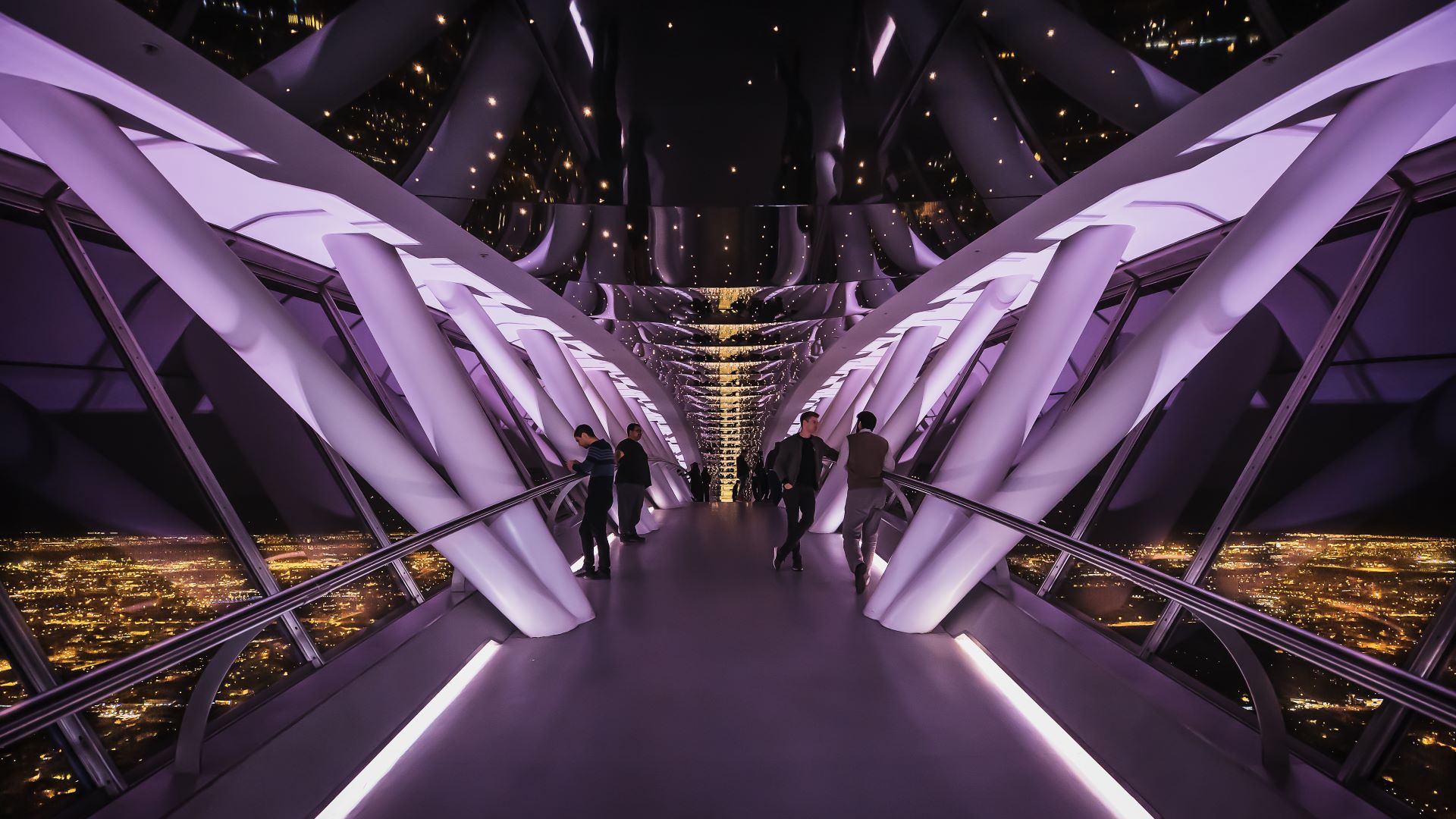
Kingdom Tower Skybridge
It was designed by the US-based architecture firm Ellerbe Becket in a joint venture with the Riyadh-based architecture and engineering firm Omrania and associates.
At the top of the tower, an inverted arch is spanned by a glass skybridge housing a public observation deck, Its design was inspired by iconic structures from around the world, including the Gateway Arch in St.Louis, The Sydney Harbour Bridge and the Eiffel tower.
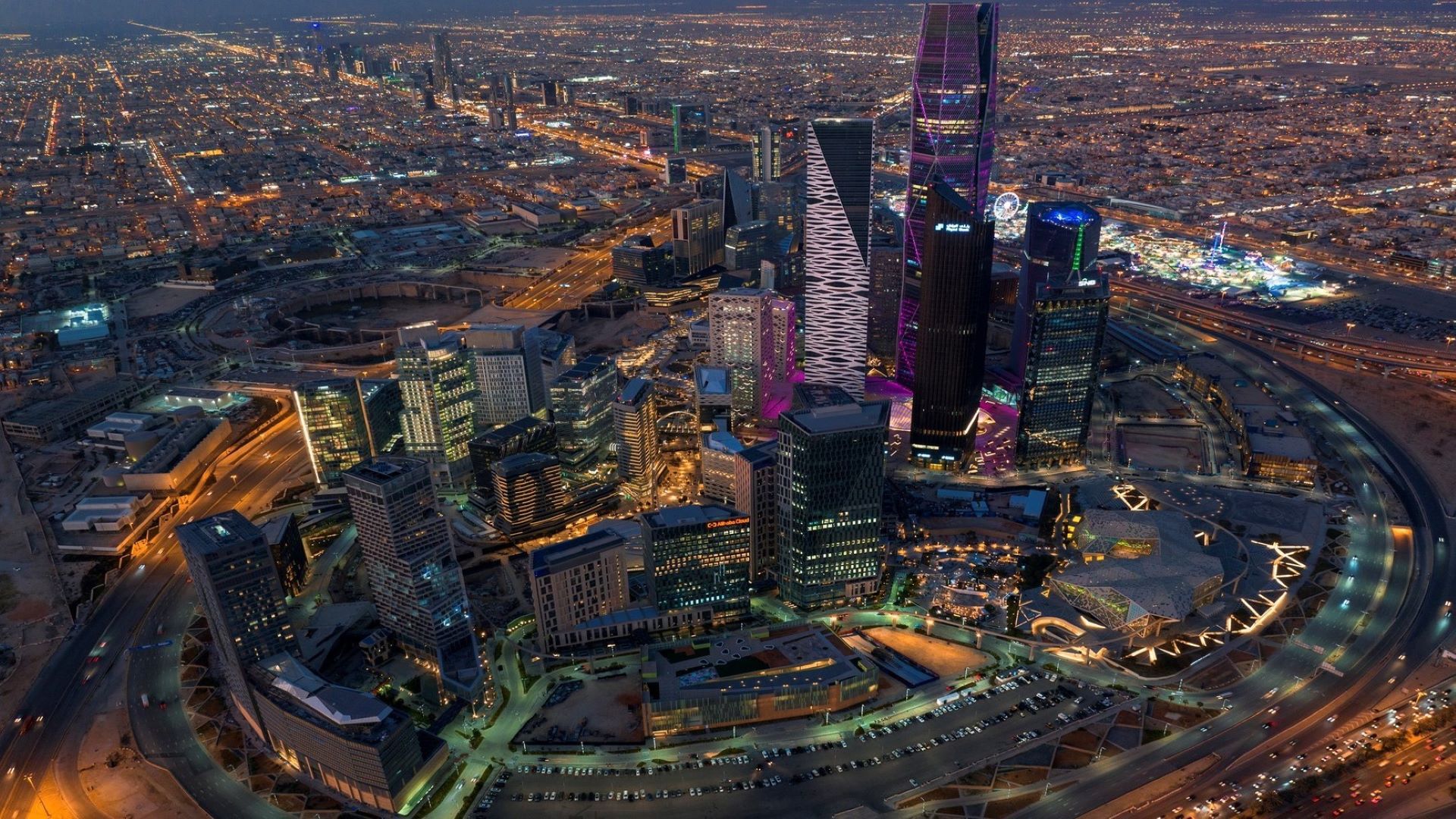
KAFD & Grand Mosque
King Abdullah Financial District (KAFD) Grand Mosque in Riyadh won the International Architecture Prize, in the Religious Buildings category, for the Year 2020.
Today we will be visiting a landmark within a ‘forest’ of skyscrapers,
The building represents the spiritual centre of the Master Plan and serves as the Juma’ah (Friday) mosque for the visitors and residents of the King Abdullah Financial District (KAFD); an all-new mixed-use district in Riyadh.
Inspiration and basis for the unique geometry of the mosque is the crystalline intersecting plates of a desert rose. The building is further landmarked by two sculpted 60m minarets. The development of the design involved a series of complex parametric arrays to ultimately create a simplified and dynamic massing which represents an abstraction of the desert rose. This form and movement in stone extends to the 5th elevation completing an exciting profile, viewed from all angles. The skin of the building appears to rise up from the earth as an emerging crystal mass, bursting from the earth. In the same way the minarets appear to rise up, piercing the landscape.
Diriyah visit
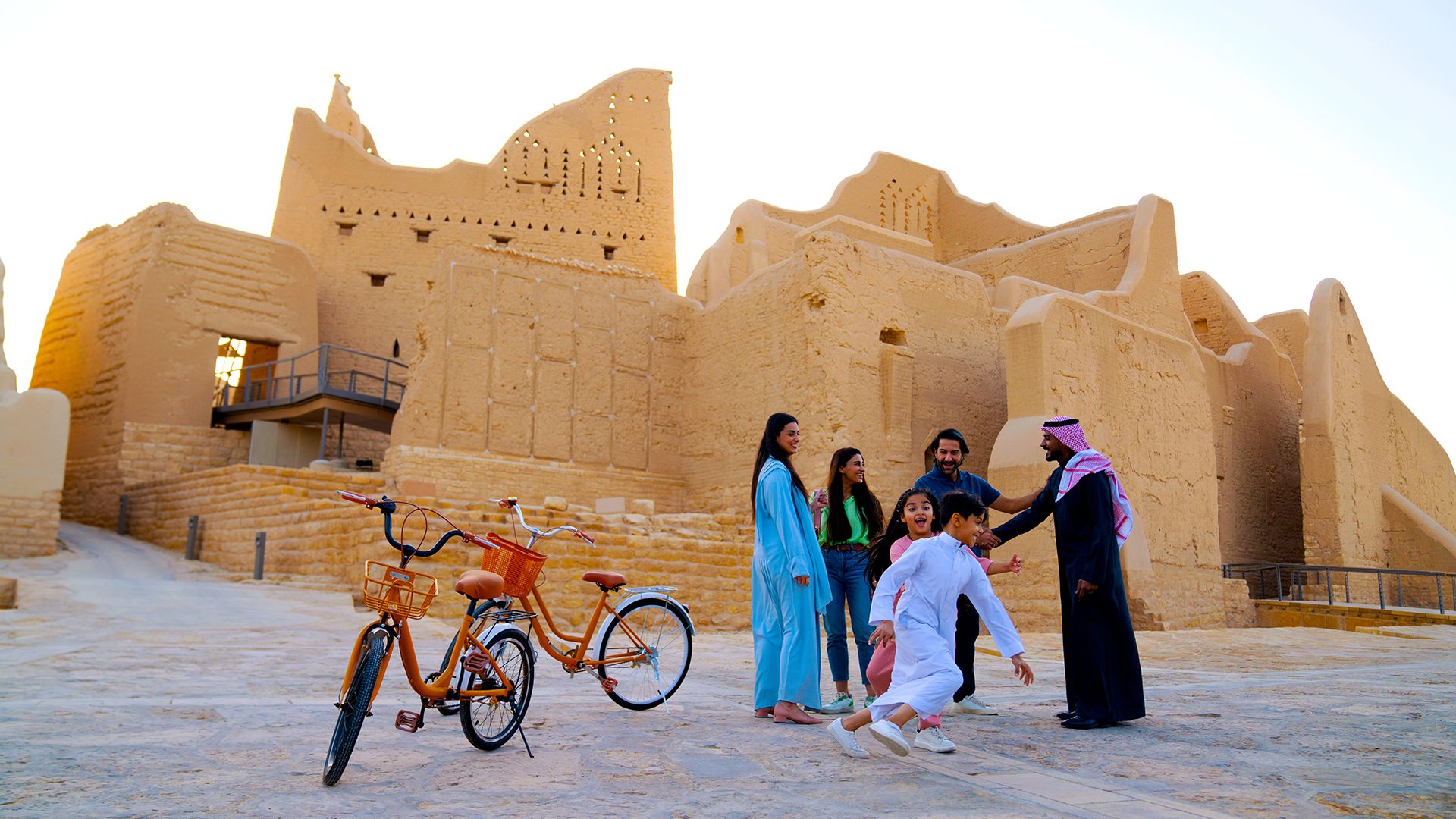
We will visit Diriyah, birthplace of the first Saudi state, historical crossroads of pilgrims and traders, and home to one of the kingdom’s most ambitious heritage developments.
The historical district of Turaif in Diriyah, Saudi Arabia, is a UNESCO World Heritage Site and is known for its well-preserved adobe structures that showcase the Najdi architectural style. It was the first capital of the Saudi dynasty and holds great cultural and historical importance in the country’s history. Visitors can explore the traditional mud-brick buildings, historical mosques, and learn about the rich history of the region.
Day 3: Fly to Alula
Departure
Flight to AlUla
Arrival to AlUla
AlUla, The World’s Masterpiece, is one of the oldest cities in the Arabian Peninsula and home to Hegra, Saudi Arabia’s first UNESCO World Heritage site.
A land rich in historical, geological and geographical significance, this ancient city, once at the crossroads of The Silk Road and The Incense Route, has only recently been re-discovered by the world.
A walk in the old town
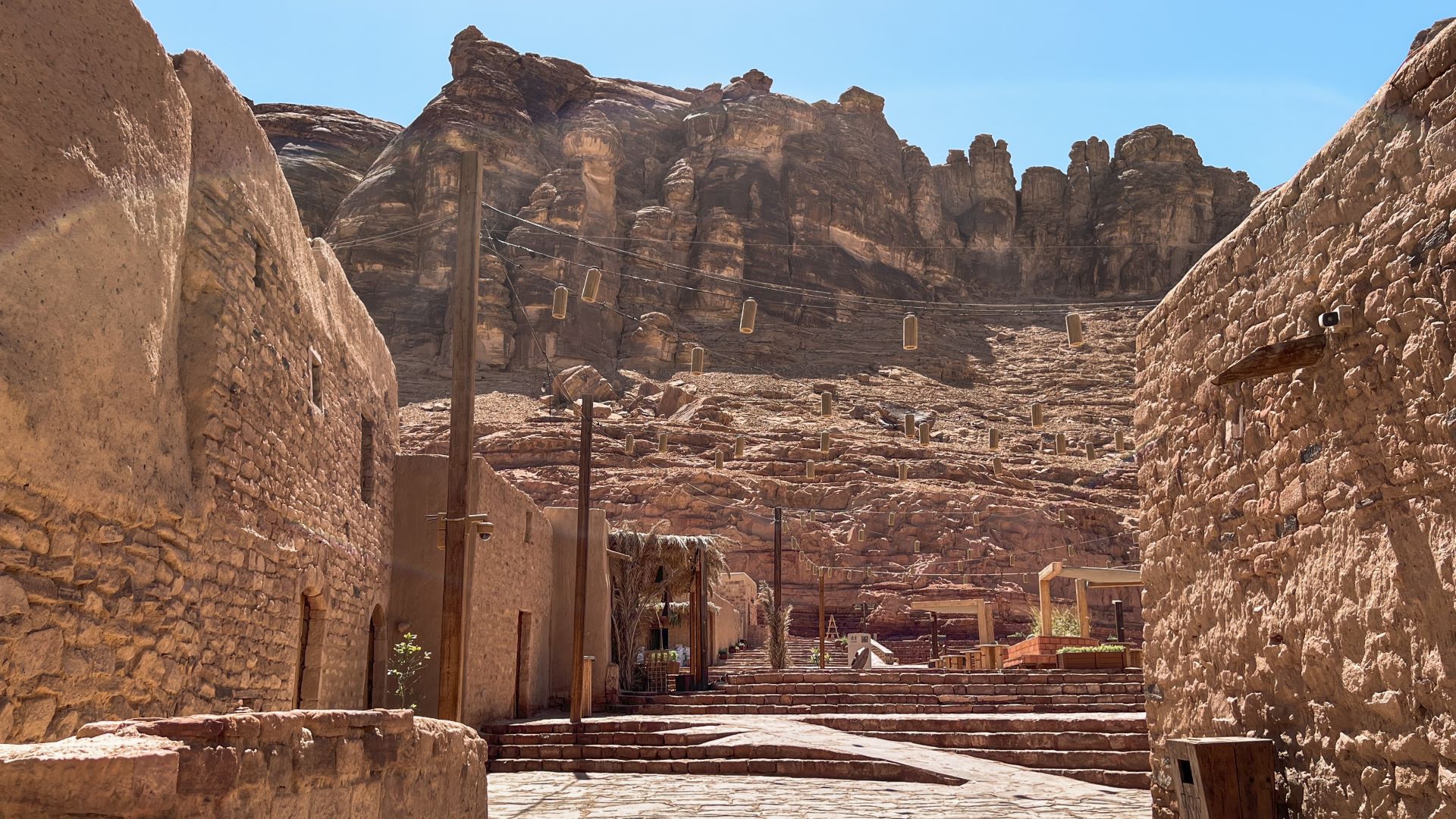
Explore Old Market Street in AlUla Old Town and shop a variety of retail stores featuring local artisans, entrepreneurs, cafes and more.
Cultural activations, handicraft stores, local speciality foods to name a few, are featured for guests to discover and learn more about the wonders of AlUla.
Elephant Rock at sunset
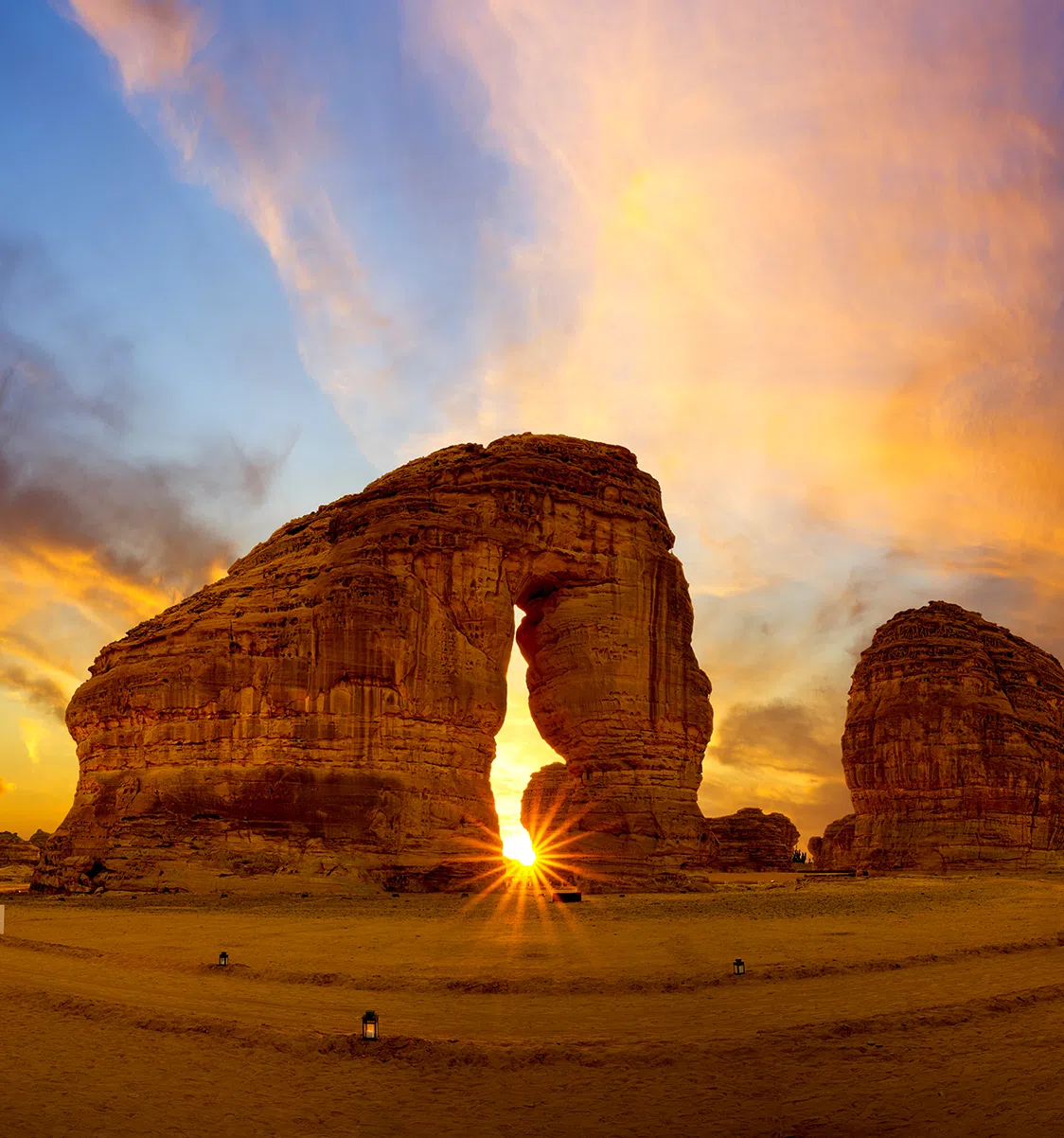
Early evening, we will take you to the Elephant Rock, also known as Jabal AlFil, one of AlUla’s many geological marvels. Unlike the ornate, hand-carved facades of nearby Hegra’s Nabataean tombs, the “trunk” and “body” of this monolithic red sandstone beast were hewn by natural forces — millions of years of wind and water erosion. The beauty of the unrefined structure is enhanced by its surroundings of a fine-sand sea studded with rocky outcrops, many of which are equally impressive in size and have interesting shapes and figures.
The area has very nice atmosphere with a cafe and restaurant, the seating area are build underground filled with magical lights that its just wonderful to witness the sunset.
Hegra Vintage Land Rover tour
Today let’s explore the most popular historical site in Saudi Arabia, Madain Saleh in a vintage Land Rover. It is one of Saudi Arabia tours that is a must do, it is the first to be listed as a UNESCO Word Heritage, Madain Saleh means the “cities of Saleh” after the name of the Prophet Saleh who tried to convert the ancient people of Thamud to Islam. But this name started to be used only during the Ottoman occupation of the Hejaz, whereas the people who built this city, the Nabateans, called it Hijra.
The importance of Madain Saleh is ostensibly displayed by its 111 monumental tombs, among which 94 were decorated with majestic facades on the sandstone massifs of the area, especially the Jibal Ithlib. The smallest tomb is barely 2,7 meters tall but the biggest reaches an impressive 21,5 meters! Madain Saleh was the second largest city of the Nabatean kingdom whose capital was Petra (in today’s Jordan) where the Nabatean people created more than 600 tombs. What most people dont know that there are many other fascinating archeological sites attest to the thousands of years of human occupation of the area thanks to the underground water available for millennia.
Dadan-Ikma Mountain Landrover tour
Let’s explore the ancient capital city of Dadan and examine tombs, excavation sites, and thousands of early Arabic inscriptions in a vintage Landrover.
Ikma mountain or Jabal Ikmah, a mountain near to the ancient city of Dadan, the capital of Dadanite and Lihyanite Kingdoms, has been described as a huge open-air library.
There is no such site that is more significant, than Jabal Ikmah, home to the highest concentration of, and most varied inscriptions, in AlUla.
We hope you’re ready to be blown out by this beautiful journey as we will start with The most famous oases of the 1st millennium BCE the oasis of Dedan, where excavations on extensive archeological sites have revealed the existence of large fortified cities. These kingdoms developed their own culture including a specific language and alphabet, that resulted in a mix of Arabian traditions and strong influences from the surrounding empires.
About 1 kilometer south of the main excavation site of Dedan are two exceptional tombs located some 50 meters above the wadi where the ancient oasis was centred. Those are the only tombs that are decorated with two carved lions each, showing the importance of their owners, being governors or influential people. These sculptures of lions that are an outstanding example of the Mesopotamian influence, and are the proud iconic figures of this ancient oasis.
Jabal Ikmah, a mountain near to the ancient city of Dadan, the capital of Dadanite and Lihyanite Kingdoms, has been described as a huge open-air library.
Maraya
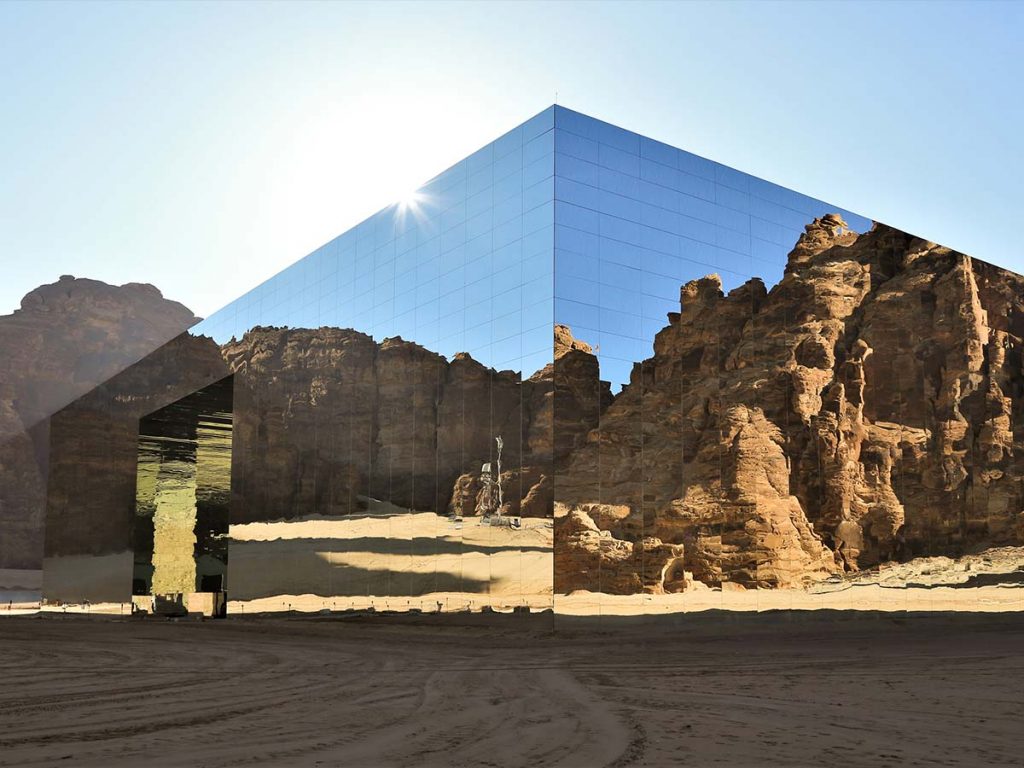
Maraya is a stunning piece of art set in the desert canyon of Ashar Valley. Designed to blend into the surrounding landscape, it rises from the sand like a mirage. The state-of-the-art structure is covered in 9,740 mirrored panels reflecting AlUla’s beauty, making it the largest mirrored building in the world, according to Guinness World Records.
Maraya, meaning mirror or reflection in Arabic, celebrates AlUla’s significant role in history as a crossroads of cultures for centuries.
Harra View point at sunset
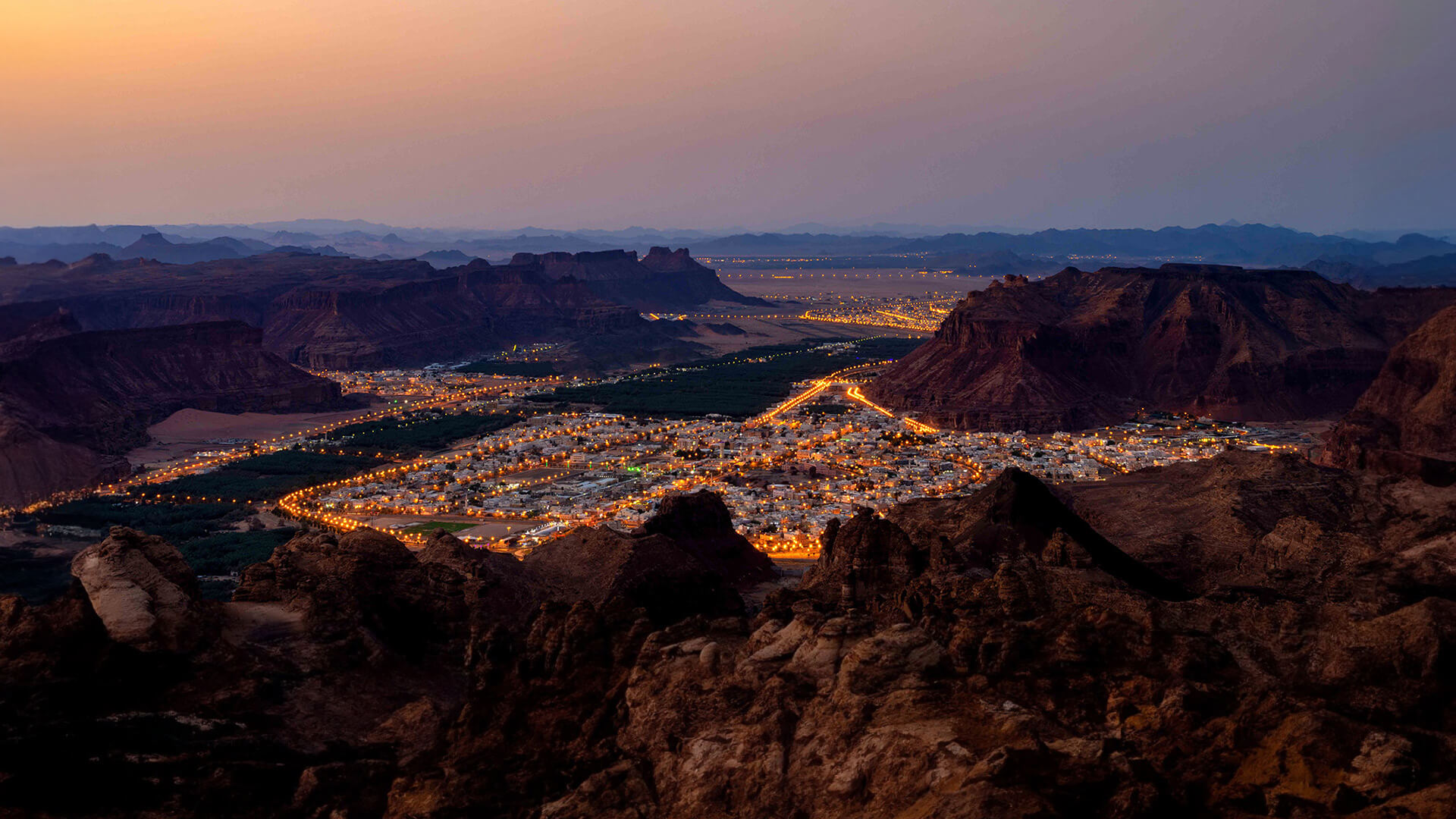
AlUla is blessed with numerous lookout points that offer an elevated view of the epic landscape. Scale the black lava stone terrain of Harrat Uwayrid, and you’ll be rewarded with views over Dadan, Ula oldtown, AlUla Fort and the AlUla Oasis. Stand at what feels like the edge of the world, meditate, and reconnect with nature. Arrive before sundown to soak up the sights and sounds of the golden hour, when the sky’s orange glow adds a magical touch to everything you see. Stay for sunset and watch the sky slowly fill with thousands of dancing stars.
Day 5: Free day – Optional tour
AlUla Hot Air Balloon – Optional (USD 365 per person in Shared trip)
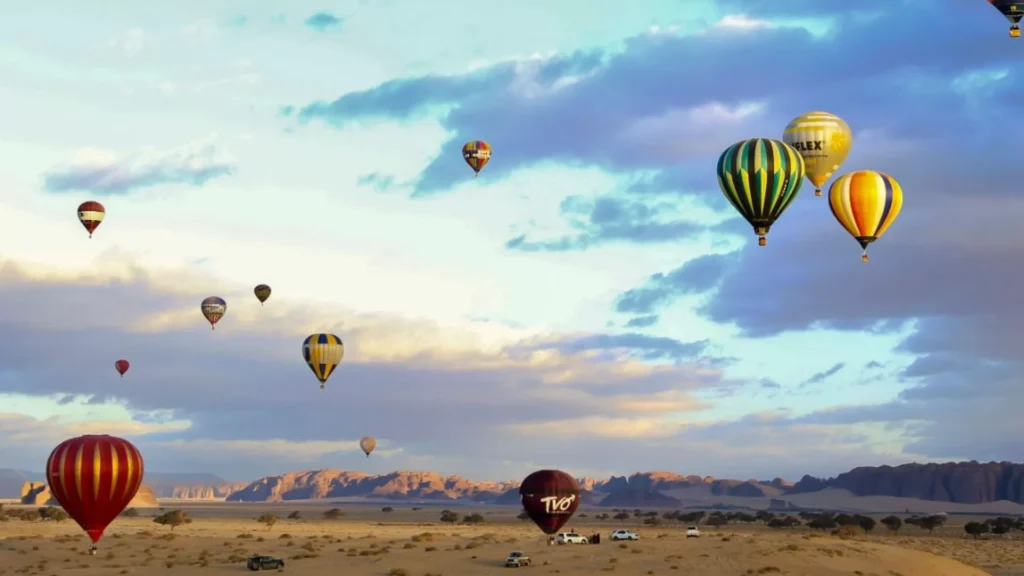
Rise with the sun and soar high above AlUla. Float through the early morning in this magical hot air balloon experience – sure to be something you’ll never forget. Each flight will last around 45-60 minutes depending on weather.
A hot air balloon tour is an essential part your visit to AlUla. Even the most stunning images fail to capture its true beauty. Drift gently over the UNESCO World Heritage Site of Hegra, around unique rock formations and over lush farmlands. The diverse colors and vistas of the flight will make for beautiful photographs and unforgettable memories.
Sharaan Platinum Dinner Safari (7 hour) – Optional (USD 365 per person for shared car & USD 1,215 per person for private car)
Explore Shaaran Nature Reserve’s stunning landscapes with incredible sunset views, a nocturnal eco-walk, delicious dinner, and mesmerising stargazing.
- Pick-up from AlUla hotels in a Land Rover Defender 130 between 02:30 PM and 04:00 PM, depending on the season. We will inform you of the exact pick-up time around noon on the day of your experience.
- Arrive at the Sharaan Nature Reserve and receive your stainless steel water bottle to take home. Get a briefing from your dedicated Conservation Guide about your experience.
- Explore the Reserve as you embark on a safari through the canyons and valleys, with several opportunities to stop and explore. Points of interest include vast rock formations telling unique stories, inscriptions dating back thousands of years, and lush fields in which you can truly take in the unique scents of the local flora.
- At sunset, embark on a short hike up a canyon to be greeted with a breathtaking scene of a vast valley and canyons. Sit back, relax and enjoy canapes as you watch the sun go down.
- Arrive at your camp for the evening and experience true magic as the scene of lantern-lit canyons unfolds before you.
- Venture into nature with your dedicated Conservation Guide and UV lights as you try to spot nighttime creatures and learn about why they are so important to the ecosystem.
- Indulge in a four-course meal that consists of a South African-style “braai” completed with grilled meats, vegetables and sides as well as indulgent appetisers and desserts.
- Retreat to the lounging area and relax next to the bonfire as you listen to tales of the night sky with an immersive stargazing session and even get to see the stars and planets up close through a telescope.
- Return to the hotel between 09:30 PM and 11:00 PM, depending on the season. Your total experience will last approximately seven hours.
Day 6: Drive to Red Sea
AlUla to Red Sea
3 hr 37 min (260 km)
Arrive to Red Sea
The Red Sea Project is the world’s most ambitious regenerative tourism project, offering an exclusive experience of unparalleled diversity for discerning global travellers. The site encompasses an archipelago of more than 90 pristine islands, miles of sweeping desert and dramatic mountain landscapes.
Option 1: Ritz Carlton, Nujuma
Born from the stars of the infinite sky above and the colorful reef below, Nujuma, a Ritz-Carlton Reserve carries on the traditions of those who traveled across uncharted territory to discover pristine natural beauty, rich cultural heritage and flavors as vivid as the sea itself. Surrounded by crystal-clear water and soft white sand, Nujuma is an unspoiled sanctuary where exploration unveils a constellation of unforgettable experiences
Option 2: St Regis resort
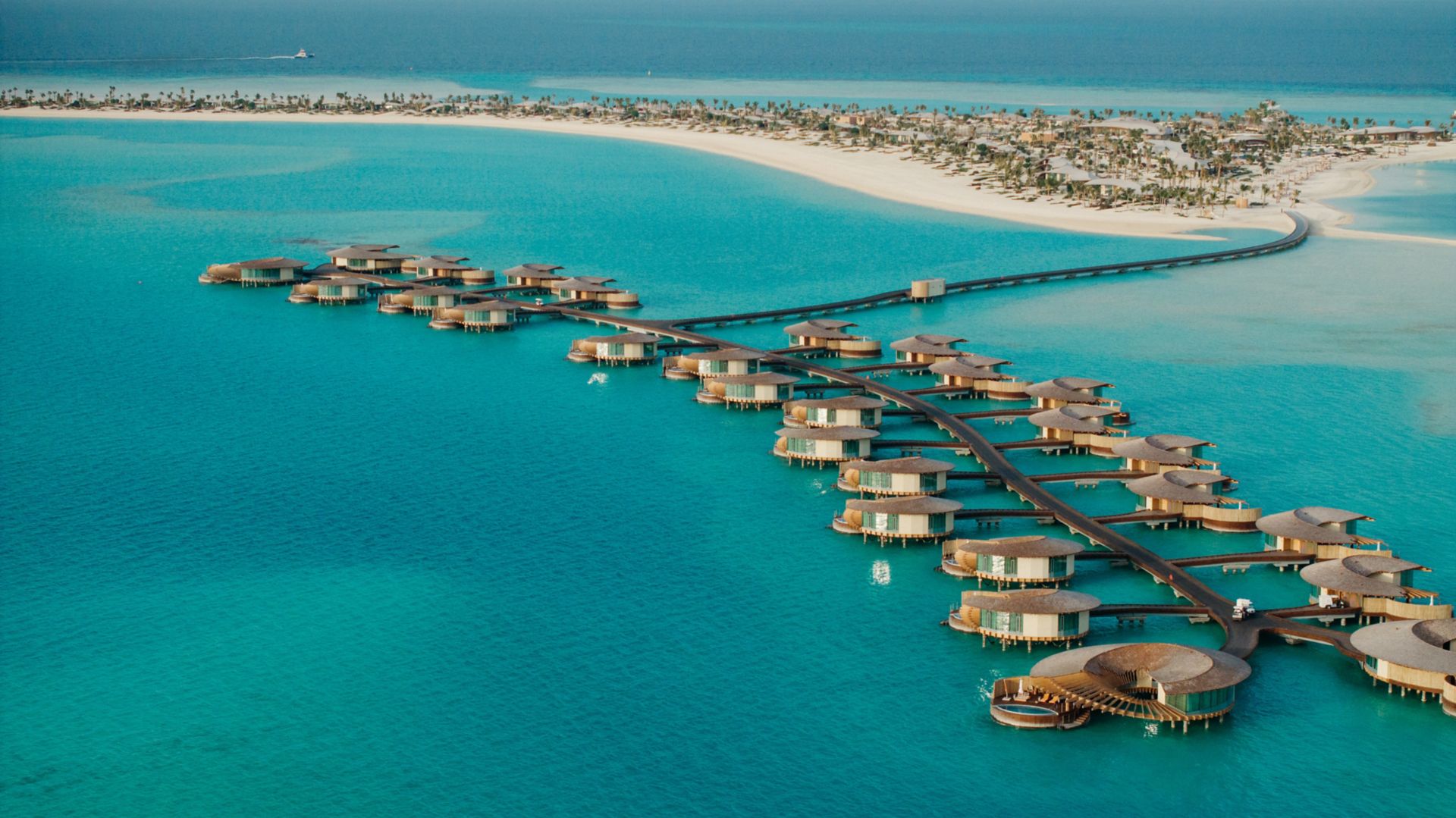
Located on a pristine private island, The St. Regis Red Sea Resort presents a compelling vision of exquisite living in the Ummahat archipelago. Fashioned from one of the world’s little known natural treasures, the destination artfully blends the brand’s visionary spirit, avant-garde style, and bespoke service with a progressive new benchmark for sustainable development.
Accessed from the coast of Saudi Arabia via chartered boat or seaplane, the island occupies a secluded position in the pioneering The Red Sea project. A rich environment of timeless glamor, the collection of 90 overwater and beachfront villas each have a spacious footprint and private pool.
Creating a setting for immersive experiences, the resort includes outdoor pools, high-tech fitness center, The St. Regis Spa, and Children’s Club, alongside exceptional fine dining. Each stay is enhanced by a curated selection of signature rituals and the iconic St. Regis Butler service.
Option 3: InterContinental The Red Sea Resort
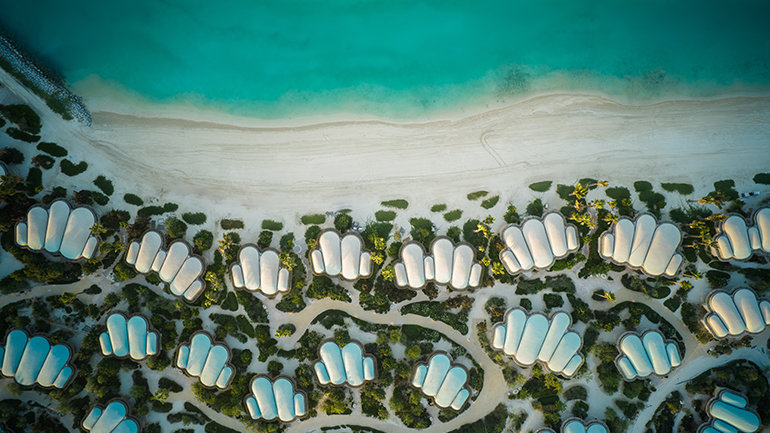
InterContinental The Red Sea Resort is a luxury beachfront property located on Shura Island within the visionary The Red Sea Project. Surrounded by pristine waters and vibrant coral reefs, the resort offers elegant rooms and suites designed with sustainability and contemporary Arabian style in mind. Guests can enjoy private beach access, world-class dining, wellness facilities, and curated marine experiences such as snorkeling and sailing. Built to high environmental standards, the resort reflects Saudi Arabia’s commitment to regenerative tourism. It is an ideal destination for travelers seeking exclusivity, nature, and refined relaxation on the Red Sea coast.
Day 7: Free day at leisure
No Plans For This Day
Day 8: Free day at leisure
No Plans For This Day
Day 9: Fly to Jeddah
Transfer to airport
Flight to Jeddah
Arrive to Jeddah
Welcome to Jeddah, Over the years, no Saudi city has been more open to outside influencers such as traders, international artists and Makkah-bound pilgrims than the ancient port of Jeddah. Indeed, the city’s unofficial motto is “Jeddah ghair,” or “Jeddah’s different.” Today, Jeddah is Saudi Arabia’s buzzing cosmopolitan hub, home to gleaming hotels and big-ticket events
Transfer to the hotel
Jeddah – City tour
Today we will start our tour in the morning with a short stop at Jeddah Corniche and Jeddah water front before we go to our next stop at Tayebat Museum.
The Floating Mosque was built in 1985 on a water surface, with bases planted under the surface of the sea. It is also called “Al Rahmah mosque”. It is marked by its bright white color and its turquoise dome which paints a wonderful scene especially when the sun shines on it to reflect the beauty of architecture joined with Islamic and traditional constructive art. The beauty of the mosque is not limited to its construction, it is also equipped with advanced sound and lighting technologies, to complement the elements that distinguish it from others with serenity and extreme beauty.
We will head now to The Tayebat Museum for a fascinating look into Jeddah’s long and cosmopolitan past, take an informative tour indeed the Tayebat Museum for a superbly curated representation of the city’s 2,500-year history. Located in the Al Faisaliyah district, the museum is housed in a multiroom complex that re-creates the traditional Hijazi architecture of the old city, with bay windows overlaid with intricate wooden lattice work and ornate coral masonry.
With several floors of in-depth exhibits, the museum offers a living history lesson on the foundation of Jeddah, Saudi Arabia and the wider Arabian Peninsula. There is also an entire floor dedicated to the city’s rich Islamic heritage.
After our visit we will go to The house of Islamic arts, a museum specialized in Islamic arts. From the far countries of China and India to the farthest countries of the Maghreb and Andalusia of various arts, where the museum contains more than a thousand pieces of art representing 15 centuries of the history of Islamic art from all countries of the Islamic world
Before we move to the next tour we will have lunch we will suggest one of the local nice restaurants here in Jeddah that serves the famous traditional dishes in Jeddah.
Tayebat Museum Closed on Fridays.
Al Balad Tour – Jeddah Historical City
In the evening we will start our tour in Al Balad as local call it which means “ the town” as reference to the base of Jeddah. Al-Balad was founded in the 7th century and historically served as the centre of Jeddah.
Our tour will go through the history of these building including going inside one of the buildings to see the interior designs , furniture Al Balad is registered as a world heritage UNESCO site and since then the old buildings with its unique window designs and doors are being preserved along with its unique buildings which some have been built using sea shells and stones !.
We will also explain the historical importance of some sites and locations while we wonder around the narrow streets to explain how merchants used to sell their goods and how pilgrims used to get their supplies of cloth and food before they head to Makkah through the Makkah Gate in Al Balad.
The old Mosques is another tourist attraction where some were founded over 300 years ago and still functional as a mosque.
Day 11: Departure – Flight to Muscat
Transfer to airport
Flight to Muscat
Arrival at Muscat International Airport
Arrive at Muscat International Airport by flight ( flight details to be confirmed) . Upon Arrival meet pass through the immigration and customs. Meet our driver in the main arrival hall for your transfer to hotel
Arrive and check in at hotel ( standard check in time 1500 hrs)
Rest of the day at leisure
Day 12: Damaniyat Island
Damaniyat Island (sharing basis)
Breakfast at hotel
09.00 hrs : Transfer from hotel to Al Mouj Marina
09:30 hrs: Arrive at Marina.
10:00 hrs: Embark on a speedboat and head to the beautiful Damaniyat Islands. It will take 45 minutes to reach the island and you will. Dive into the crystal-clear waters and explore the vibrant coral reefs teeming with marine life. Discover the underwater wonders of the islands, encountering colorful fish, turtles, and other fascinating marine creatures. Spend your day on the Island After the trip, relax and unwind at your accommodation, reminiscing about the day’s adventures.
1700 hrs: Return to Marina and transfer to hotel
Rest of the day at leisure
Overnight at the selected hotel
Muscat City Tour
Morning breakfast at hotel
This morning we will start our tour with visit to Grand Mosque the most exquisite Mosque in Oman. The developed part of the site, Including the fully consolidated areas and landscaping, covers 416,000 square metres. The Mosque complex (covering 40,000 square metres) is constructed on a raised podium in keeping with the tradition of Omani mosques that were built elevated from street level. It can accommodate up to 20,000 worshippers and consists of a main prayer hall, ladies prayer hall, covered passageways, a meeting hall, and library which contains around 20,000 books. A major feature of the main prayer hall is the hand-made Persian carpet consisting of . 1,700 million knots, Weighing 21 tones and made in a single piece measuring 70 x 60 metres. From design stage it took 4 years to complete and 600 female weavers from province of Khurasan in Iran were involved.
Note : Ladies visiting the mosque are required to cover their head with a scarf and do not wear shorts, beachwear or sleeveless outfits as they are to be fully covered.
Men are required to wear long trousers. No shorts are allowed.
Visit The National Museum is the most prominent cultural edifice in the Sultanate of Oman, which is dedicated to highlighting Oman’s cultural heritage, since the emergence of human impact in Oman to the present day.
The museum display experience is distributed to (14) halls, which include more than (7000) distinctive, carefully selected finds, and (33) digital interactive display systems.
It is the first museum in the Sultanate that includes a learning center, equipped according to the highest international standards, and is the first museum in the Middle East to employ the Braille system in the Arabic language.
Photo stop at Al Alam Palace, the official residence of His Majesty Sultan Haitham Bin Tariq the ruler of Oman. The palace is an architectural marvel for both its design and its location between the twin Portuguese forts Mirani and Jalali (A brief photograph stop from outside only).
We then drive towards Muttrah Souq – one of the most popular souqs in the Middle East. Take a walk in its labyrinth of alleyways beckoning with a myriad of merchandise, from imported fabrics to exotic Oriental spices, perfumes and richly handcrafted artifacts. A visit to this frenetic, pulsating hub of Muscat’s old quarter makes for a delightful experience. Here, scents of exotic Arabian perfumes and spices float through the air. Other shops specialise in famous Omani khanjars (daggers), antiques, traditional silver jewellery, and handicrafts in copper, camel bone, wood, leather and hand-made Omani costumes.
Visit to the Royal Opera house Muscat
Royal Opera House Muscat is the leading arts and culture organization in the Sultanate of Oman. The vision of the Opera House is to serve as a centre of excellence in global cultural engagement and strives to enrich lives through diverse artistic, culture and educational programes.
The multidisciplinary work of Royal Opera House Muscat showcases rich and diverse artistic creations from Oman, the region, and the world; provides a space for culture and socioeconomic development reflections and actions; inspires audiences and nurtures creativity with innovative programs; fosters cultural vitality and unleashes talent; promotes cultural tourism; and puts cultural diplomacy into practice by reinvigorating global and multi-disciplinary collaborations and exchanges.
Return to hotel
Overnight at the selected hotel
Day 14: Muscat – Jebel Akhder
Transfer to airport
Flight to Luxor
Arrival to Luxor
Breakfast at hotel
Check out from the hotel and drive to Jebel Akhder. We drive to Manah and visit o Oman Across ages Museum. A museum that offers visitors a comprehensive journey through the rich history and diverse heritage of the Sultanate of Oman.
Here are some key features and highlights of the museum:
Architecture: The museum’s architecture is a blend of traditional Omani design elements and modern aesthetics. It reflects the country’s commitment to preserving its heritage while embracing modernity.
Exhibits: The museum boasts a vast collection of artifacts, artworks, and interactive displays that chronicle Oman’s history from prehistoric times to the present day. Exhibits cover various aspects of Omani culture, including archaeology, maritime history, Islamic art, traditional crafts, and the country’s modern development.
Prehistoric Gallery: This section showcases artifacts and fossils dating back to ancient times, providing insights into Oman’s early human settlements and prehistoric civilizations.
Islamic Art Gallery: Featuring exquisite examples of Islamic calligraphy, ceramics, textiles, and metalwork, this gallery highlights the artistic achievements of Oman’s Islamic heritage.
Maritime Heritage: Given Oman’s strategic location along ancient trade routes, the museum dedicates a significant portion of its exhibits to maritime history. Visitors can learn about Oman’s seafaring traditions, dhow building techniques, and the country’s role in global trade networks.
Cultural Diversity: The museum celebrates Oman’s cultural diversity by showcasing the traditions and customs of its various regions, including displays on traditional dress, music, dance, and folklore.
Interactive Displays: To engage visitors of all ages, the museum features interactive exhibits, multimedia presentations, and immersive experiences that bring Oman’s history and heritage to life.
Educational Programs: The museum offers educational programs, workshops, and guided tours for schools, families, and tourists, providing opportunities for deeper learning and cultural exchange.
Overall, the Oman Across Ages Museum serves as a gateway to Oman’s rich cultural heritage, offering visitors a fascinating exploration of the country’s past, present, and future aspirations.
Continue from here to Jebel Akhder.
Arrive Jebel Akhder. In Arabic Jebel Akhdar means green mountains, and the area is famous for its gardens, farms and terrace plantations. Jabal Akhdar is renowned for its rose gardens, particularly around the village of Al Ayn. The roses cultivated here are used to produce rose water and rose oil, which are highly valued in Omani culture and exported internationally (Only in March and April) .
Arrive and check in at selected hotel in Jebel Akhder
Rest of the day at leisure
Overnight at the selected hotel
Day 15: Jebel Akhder
Jabal Akhdar Exploration: Villages, Terraces & Mountain Landscapes
Morning breakfast at hotel
This Day explore the town of Jebel Akhder. In Arabic Jabel Akdhar means green mountains. Jabel Akdher is famous for gardens, farms and terrace plantations.
Follow your guide as they take you through the terrace gardens to view this intriguing location, the villages of Saiq, & Al Ain as they dot the landscape. The villages overlook a spectacular landscape of dramatic peaks, gorges and wadis. The roses of Jabal Al Akhdar fill the air with fragrance when in full bloom (March / April). Rose water is distilled in the homes of the villagers.
You view the remote village, Wadi Bani Habib and plantations. From the top the village looks in pretty good shape for an abandoned village, however as one gets closer, he will notice that nobody is home, rooves have collapsed, walls crumbled and doors completely missing. The village is empty and just waiting to be explored (no visit, only view from the top).
Continue from here to visit Al Shuwgra Village. Located on the cliff top, It is a mist being in the Green Mountains to drop by Al Shogara, the forgotten village. Built in a rock this ancient village gives a really good taste of how life looked like many years ago in this area. Total population of this village is 40. Here you can break for lunch at local home turned into guest house.
After lunch drive back to your hotel
Please note, the vehicle does not go up to this village. The vehicles will be parked on the road side and guests will have to trek down and cross the dry wadi through a wooden bridge.
Overnight at Anantara Jebel Akhder
Optional: Via Ferrata
Begin your mountain adventure in the peaceful village of al sharga, perched high on the edge of the Jebel Akhdar escarpment. From this quiet and scenic hamlet, your journey takes a bold turn—straight into the cliffs of oman’s most dramatic mountain range.
Led by expert guides, you’ll gear up and follow the via ferrata route—a secure iron path bolted into the cliffside. As you clip in and descend or traverse along sheer rock walls, you’ll pass over narrow ledges, hanging bridges, and vertical ladders, all with sweeping views over the canyon below. The exposure is real, but so is the safety.
This adrenaline-charged experience culminates in a thrilling zip line ride that launches you across a vast gorge, giving you the rare feeling of flying above the raw, untouched beauty of the hajar mountains. All around, you’ll see terraced farms, hidden wadis, and jagged peaks carved by time.
Jebel Akhder – Muscat Airport
Morning breakfast at hotel
Check out from the hotel and drive to Nizwa Visit Nizwa Souq .The impressive New Souq complex has been sensitively designed using Omani fort architecture and elegant Islamic arches. The air-conditioned halls of this souq are full of fresh fruit and vegetables, herbs and spices, huge stacks of dates and freshly caught fish. This is still the best place to buy traditional silver “Khanjars” (hand- carved Omani daggers) and Bedouin jewellery, where silver is still sold by weight.
Visit Nizwa Fort with its massive Circular Cannon Tower, making it one of the most impressive forts in Oman Built on a solid base of rock, the huge tower was designed to withstand the vibrations of 24 cannons. From the top, a superb panoramic view gives visitors a bird’s eye view all around Nizwa and the surrounding plains – a sure delight for all avid photographers!
You proceed to Jabrin castle built in 17th century is one of the finest of its kind. Its magnificent plasterwork, the carved doors and the painted wooden beams of the ceilings makes this castle amazingly different. Thereafter continue to Bahla, one of the oldest small towns of Oman and in the 12th century the capital of the tribe living in the region. The monumental fort is recently opened for public after a long restoration. Bahla is also famous for its pottery and you will visit a potter’s workshop (not possible on Fridays and Public Holidays).
Later check drive to Muscat Airport
Arrive at the Airport and check in at your Airline counter to board your flight back home