
- Overview & Itinerary
- Map

Active

Physical rating -

0 nights

Next trip

Al Ula - Buraidah - Jeddhah - Medinah - Riyadh
Max 20 people
Saudi Discovery

Itinerary
Arrival to Riyadh
Today we will be welcoming you at the airport as our guide will be waiting for you holding a sign, we will be taking you to your hotel where you can rest for a bit.
Welcome to Riyadh, the birthplace of modern Saudi Arabia, where old-world charm meets 21st-century vision. Riyadh Province – also known as Al-Wosta – is home to the country’s capital: a modern metropolis with a thriving financial and business centre, and a growing cultural scene. It’s a city rich in history, boasting myriad forts, palaces and museums, and some of the country’s most colorful souks

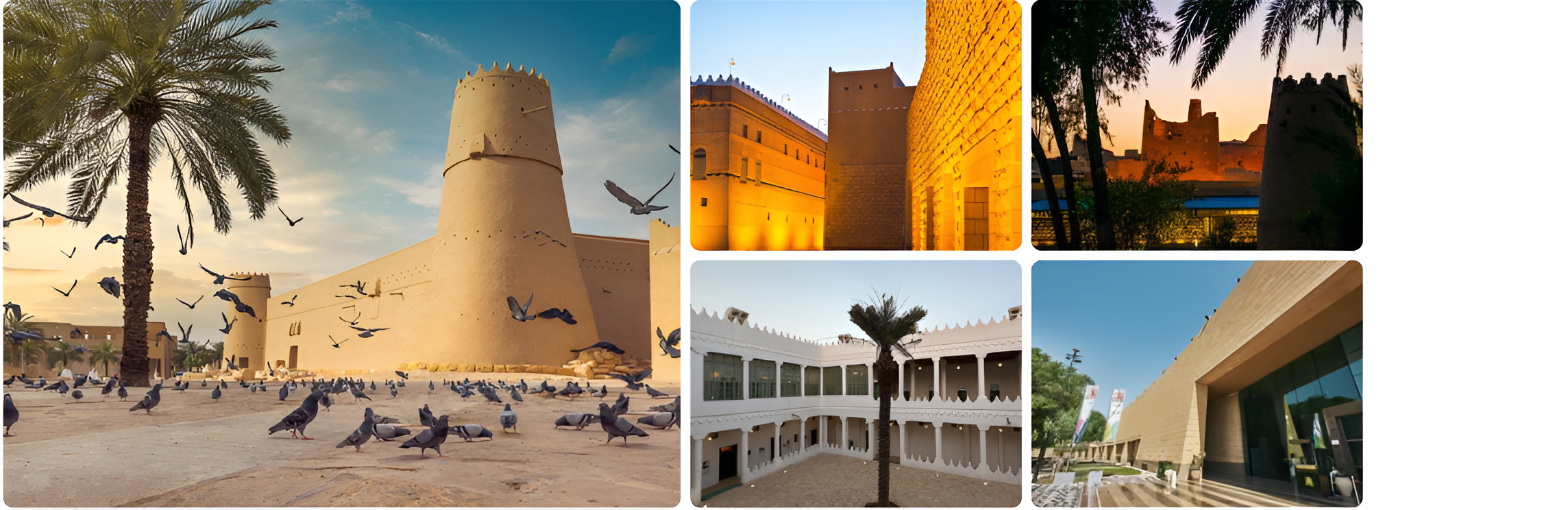
Riyadh city tour - Al Masmak - National museum - Diriyah site
First visit is Diriyah , northwest of the city and the original capital of the first Saudi state is a must-see. Its Al Turaif quarter, a carefully restored mud-brick district that was named a UNESCO World Heritage Site in 2010, offers a glimpse into the country’s extraordinary heritage.
Next on tour we will visit the National museum you will be discovering Saudi Arabia's rich past is an amazing journey that would bring you along thousands of kilometers around the whole Kingdom. An easier way to have an insight of Saudi Arabia's rich History is to visit the King Abdulaziz Historical Center in Riyadh where artifacts from all periods are exhibited and with explanations about their historical significance.
After our historical brief we will have our lunch and then continue to visit Al Masmak Fortress ,surrounded by sand, this squat fortification was built around 1865 and is like a scene out of the movies: a big fortress representing an empire. It was the site of a daring 1902 raid by Ibn Saud, during which a spear was hurled at the main entrance door with such force that the head is still lodged in the doorway. Highlights among the exhibits include maps and fascinating photographs of Saudi Arabia dating from 1912 to 1937, in galleries converted from diwans (living rooms). The roofs are covered with painted palm-tree, taramic and ethel wood and exude an old-world charm that evokes an Arabian painting. Inside, the information panels and short, chest-thumping films on the storming of the fortress and the ‘reunification’ of Saudi Arabia are reverential towards the Al Sauds but worth watching nonetheless.
In the same area and only in walking distance we will find our self in Souq Al-Zal which is one of the oldest traditional market. They sell traditional dresses, antiques, Oud " Arabic perfume" and jewelry
Riyadh to Ushaigher (Google map)
2 hr 19 min (203 km)
Click here for Google Map
Ushaiger
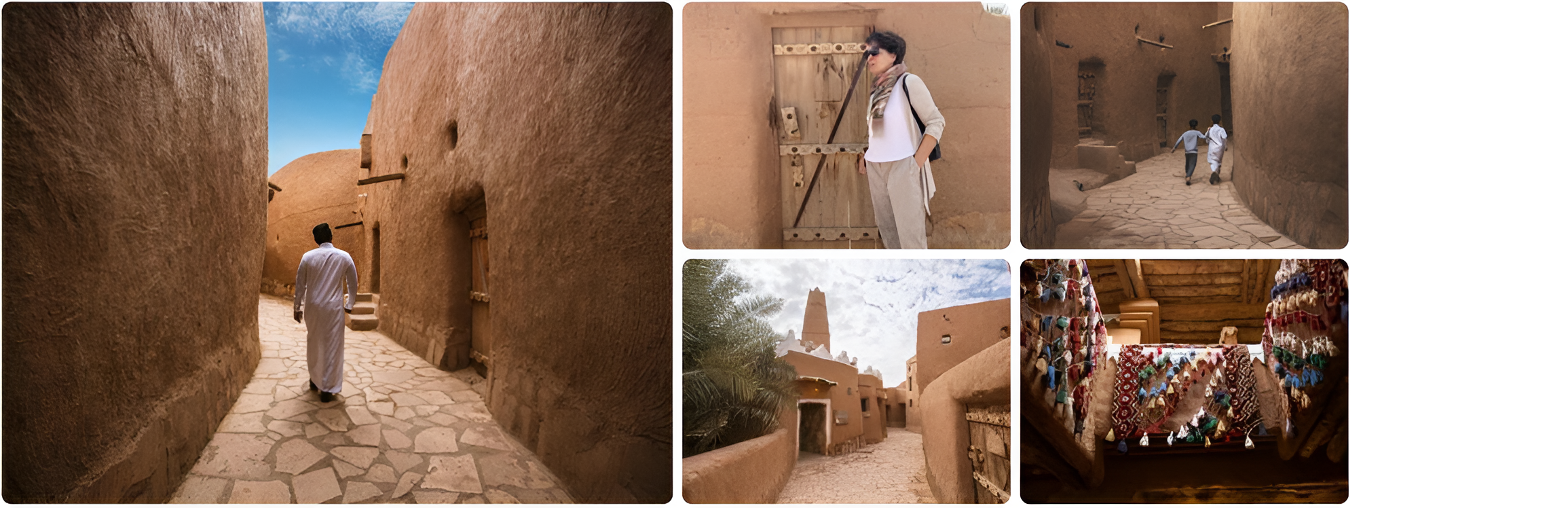
On the way to Buraydah we will stop at the city of Ushaiger to explore the heritage village. Hidden in the heart of the Najd, an oasis-dotted region 200km northwest of Riyadh, Ushaiger Heritage Village provides a glimpse of a slow-paced Saudi society of old.
Bedouins first settled here 1,500 years ago and Ushaiger quickly became a popular stopping point for pilgrims crossing to Makkah, thanks to its springs and low-brimmed olive and palm groves. But far from being a dusty, deserted museum piece, Ushaiger – which, in a naming quirk, means ‘little blonde’ to reflect the nearby red mountain that looms over the yellow mud houses – still has a small community of residents, making use of its schools, shops and mosques. To walk its narrow lanes is to enter a living museum, draped with traces of an ancient way of life.
Encased in thick walls, Ushaiger is a labyrinth of winding alleyways, shaded pathways and timber-framed walkways, crossing between hundreds of mud houses. The village is divided into districts and bisected by groves of palm trees, and includes a cluster of beautifully renovated houses. These offer a stunning example of Najdi architecture, with its distinctive triangular windows and roofs, and ornately carved wooden doors. Some still bear the names of the families who lived there
 Ushaiger to Buraydah (Google map)
1 hr 53 min (185 km)
Click here for Google Map
Al Bassam Heritage House - Souq Musawkaf
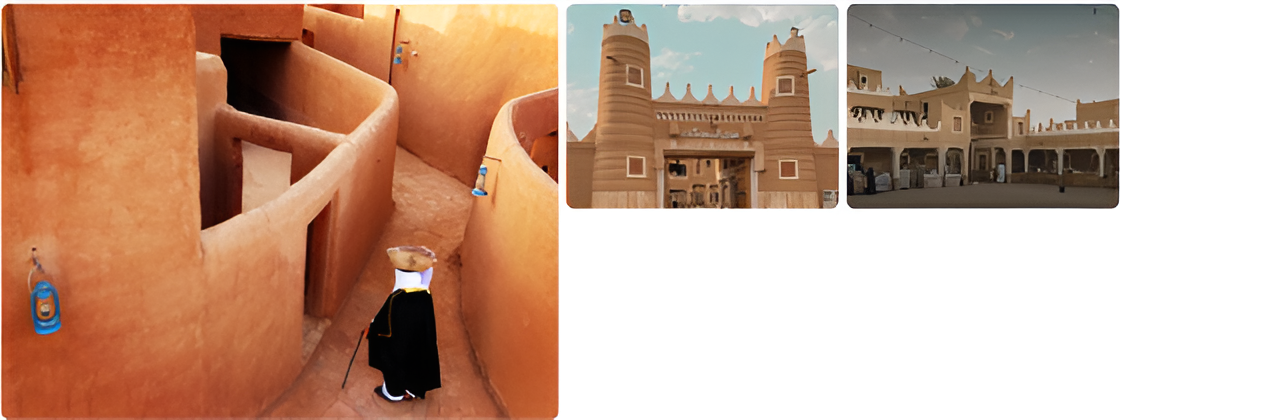
Upon arrival in Buraydah, we will visit Al Bassam Heritage house ,located in Unayzah (about 30 minutes outside\ Buraydah), was built in 1955 using traditional Najdi ventilation and lighting techniques and spans 3,500 square meters. The palatial structure’s roof incorporates traditional Najd wood carvings. (Najdi is an architectural style characterized by unfired mud-brick, which has dominated the Saudi countryside for hundreds of years.) It features 30 rooms on two floors, including\ bedrooms, guest rooms and storage rooms. Inside, visitors can enjoy ancient crafts, traditional foods, folk tales, poems and ancestral heritage and history.
Al Musawkaf Traditional Market is located next to Al Bassam Historical House in the city of Unaizah and is one of the most important landmarks of urban heritage in Al Qassim.It was built in a traditional style that mimics the houses of the past and has a courtyard surrounded by traditional mud arcades.
Ushaiger to Buraydah (Google map)
1 hr 53 min (185 km)
Click here for Google Map
Al Bassam Heritage House - Souq Musawkaf
Upon arrival in Buraydah, we will visit Al Bassam Heritage house ,located in Unayzah (about 30 minutes outside\ Buraydah), was built in 1955 using traditional Najdi ventilation and lighting techniques and spans 3,500 square meters. The palatial structure’s roof incorporates traditional Najd wood carvings. (Najdi is an architectural style characterized by unfired mud-brick, which has dominated the Saudi countryside for hundreds of years.) It features 30 rooms on two floors, including\ bedrooms, guest rooms and storage rooms. Inside, visitors can enjoy ancient crafts, traditional foods, folk tales, poems and ancestral heritage and history.
Al Musawkaf Traditional Market is located next to Al Bassam Historical House in the city of Unaizah and is one of the most important landmarks of urban heritage in Al Qassim.It was built in a traditional style that mimics the houses of the past and has a courtyard surrounded by traditional mud arcades.
Ushaiger to Buraydah (Google map)
1 hr 53 min (185 km)
Click here for Google Map
Al Bassam Heritage House - Souq Musawkaf
Upon arrival in Buraydah, we will visit Al Bassam Heritage house ,located in Unayzah (about 30 minutes outside\ Buraydah), was built in 1955 using traditional Najdi ventilation and lighting techniques and spans 3,500 square meters. The palatial structure’s roof incorporates traditional Najd wood carvings. (Najdi is an architectural style characterized by unfired mud-brick, which has dominated the Saudi countryside for hundreds of years.) It features 30 rooms on two floors, including\ bedrooms, guest rooms and storage rooms. Inside, visitors can enjoy ancient crafts, traditional foods, folk tales, poems and ancestral heritage and history.
Al Musawkaf Traditional Market is located next to Al Bassam Historical House in the city of Unaizah and is one of the most important landmarks of urban heritage in Al Qassim.It was built in a traditional style that mimics the houses of the past and has a courtyard surrounded by traditional mud arcades.
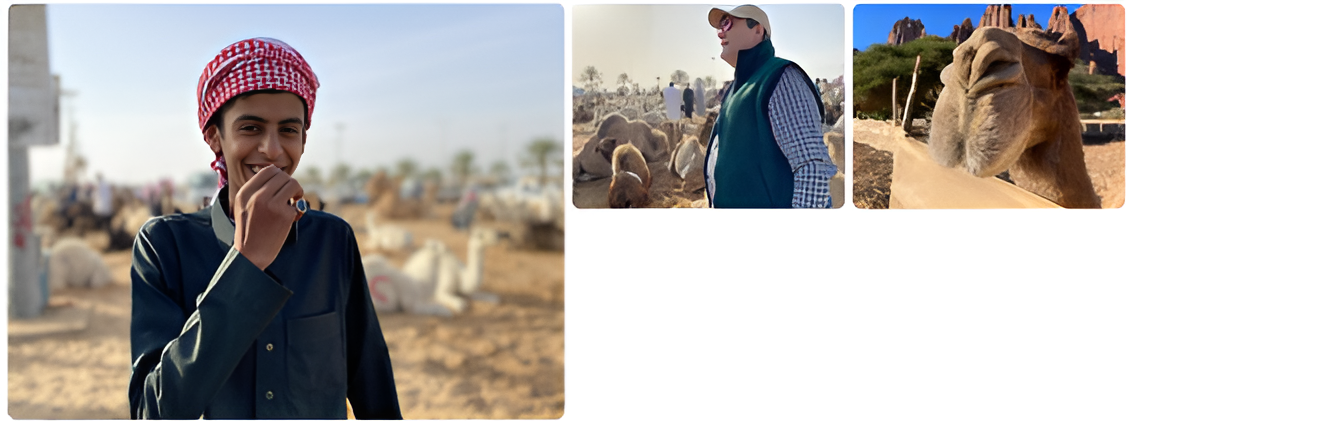
Visit The Camel Market
Before you head to Hail , you can make a stop early morning to the largest camel market in the world where auction takes
place a very authentic experience to see how bargaining works in the camel market and how locals value camels and
negotiate pricing.
Camels remain valuable to own and trade in Saudi.
 Buraydah to Hail (Google map)
2 hr 40 min (280 km)
Click here for Google Map
Hail Tour - Art Rock
Hail is located in the centre north of the country, is a land where the dream landscapes of Arabia are the theatre of the 1001 Nights.
Once you arrive you can start with one of Hail local restaurants for lunch and then pay a visit to Aarif palace. A'arif Fort is located in the city of Hail on the highest peak of a mountain overlooking the city. It was built in 1260 AH on an area of 440 sq. m.
A'arif Fort with its rectangular shape and medium size, is surrounded by a solid wall with openings to drain rainwater. Its\ walls were built of mud bricks and mud, on stone foundations, and equipped with everything the anchors and city defenders need
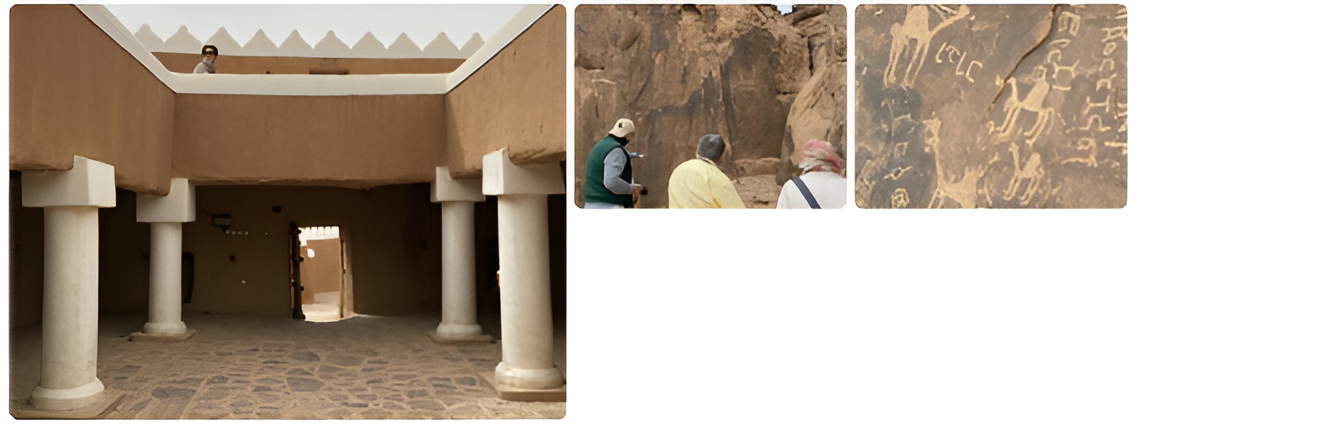
After your lunch right away heading to Jubbah over an hour drive from Hail. This worldwide famous site contains some of the oldest and most outstanding carvings of the Arabian Peninsula. It was recognized in 2015 as a World Heritage Site by UNESCO.
Jubbah is host of the two most emblematic carvings in Saudi Arabia.
The first one is a character dominating another smaller one. Locals say that it is the representation of an ancient king handing out justice.
The second one is a chariot pulled by two horses which was for decades the only known example but similar ones were later found in Hail and Tabuk Provinces.
As surprising as it sounds the people trading frankincense, spices, and other precious goods coming from southern Arabian Peninsula did cross regularly the 350 km of sand dunes between these two main trade cities. The numerous so-called Thamudic inscriptions (more than 5000) testify of this intense frequentation by travellers.
After our tour we will head back to our hotel to check in and get some rest.
Buraydah to Hail (Google map)
2 hr 40 min (280 km)
Click here for Google Map
Hail Tour - Art Rock
Hail is located in the centre north of the country, is a land where the dream landscapes of Arabia are the theatre of the 1001 Nights.
Once you arrive you can start with one of Hail local restaurants for lunch and then pay a visit to Aarif palace. A'arif Fort is located in the city of Hail on the highest peak of a mountain overlooking the city. It was built in 1260 AH on an area of 440 sq. m.
A'arif Fort with its rectangular shape and medium size, is surrounded by a solid wall with openings to drain rainwater. Its\ walls were built of mud bricks and mud, on stone foundations, and equipped with everything the anchors and city defenders need
After your lunch right away heading to Jubbah over an hour drive from Hail. This worldwide famous site contains some of the oldest and most outstanding carvings of the Arabian Peninsula. It was recognized in 2015 as a World Heritage Site by UNESCO.
Jubbah is host of the two most emblematic carvings in Saudi Arabia.
The first one is a character dominating another smaller one. Locals say that it is the representation of an ancient king handing out justice.
The second one is a chariot pulled by two horses which was for decades the only known example but similar ones were later found in Hail and Tabuk Provinces.
As surprising as it sounds the people trading frankincense, spices, and other precious goods coming from southern Arabian Peninsula did cross regularly the 350 km of sand dunes between these two main trade cities. The numerous so-called Thamudic inscriptions (more than 5000) testify of this intense frequentation by travellers.
After our tour we will head back to our hotel to check in and get some rest.
Buraydah to Hail (Google map)
2 hr 40 min (280 km)
Click here for Google Map
Hail Tour - Art Rock
Hail is located in the centre north of the country, is a land where the dream landscapes of Arabia are the theatre of the 1001 Nights.
Once you arrive you can start with one of Hail local restaurants for lunch and then pay a visit to Aarif palace. A'arif Fort is located in the city of Hail on the highest peak of a mountain overlooking the city. It was built in 1260 AH on an area of 440 sq. m.
A'arif Fort with its rectangular shape and medium size, is surrounded by a solid wall with openings to drain rainwater. Its\ walls were built of mud bricks and mud, on stone foundations, and equipped with everything the anchors and city defenders need
After your lunch right away heading to Jubbah over an hour drive from Hail. This worldwide famous site contains some of the oldest and most outstanding carvings of the Arabian Peninsula. It was recognized in 2015 as a World Heritage Site by UNESCO.
Jubbah is host of the two most emblematic carvings in Saudi Arabia.
The first one is a character dominating another smaller one. Locals say that it is the representation of an ancient king handing out justice.
The second one is a chariot pulled by two horses which was for decades the only known example but similar ones were later found in Hail and Tabuk Provinces.
As surprising as it sounds the people trading frankincense, spices, and other precious goods coming from southern Arabian Peninsula did cross regularly the 350 km of sand dunes between these two main trade cities. The numerous so-called Thamudic inscriptions (more than 5000) testify of this intense frequentation by travellers.
After our tour we will head back to our hotel to check in and get some rest.
Hail to AlUla (Google map)
5 hr 6 min (429 km)
Click here for Google Map
Free day in AlUla
You can spend your day resting from the long road trip or explore AlUla the way you like
Madain Saleh (Hegra tour)
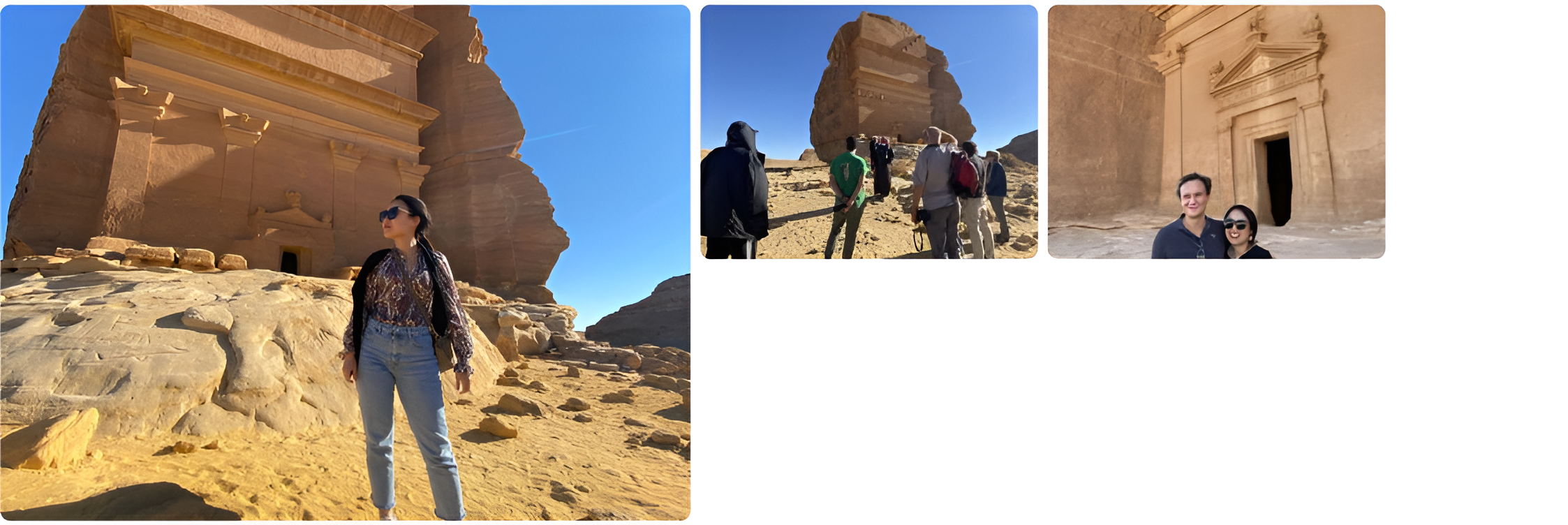
Today we are starting with the most popular historical site in Saudi Arabia, Madain Saleh is the most iconic historical site of the Kingdom of Saudi Arabia and its one of Saudi Arabia tours that is a must do, it is the first to be listed as a UNESCO Word Heritage, Madain Saleh means the "cities of Saleh" after the name of the Prophet Saleh who tried to convert the ancient people of Thamud to Islam. But this name started to be used only during the Ottoman occupation of the Hejaz, whereas the people who built this city, the Nabateans, called it Hijra.
The importance of Madain Saleh is ostensibly displayed by its 111 monumental tombs, among which 94 were decorated with majestic facades on the sandstone massifs of the area, especially the Jibal Ithlib. The smallest tomb is barely 2,7 meters tall but the biggest reaches an impressive 21,5 meters! Madain Saleh was the second largest city of the Nabatean kingdom whose capital was Petra (in today's Jordan) where the Nabatean people created more than 600 tombs. What most people dont know that there are many other fascinating archeological sites attest to the thousands of years of human occupation of the area thanks to the underground water available for millennia. Dont worry we are showing everything you need to see !
If Madain Saleh does not have as many tombs as Petra it has a special feature with the numerous inscriptions written on the monumental tombs
 Elephant Rock
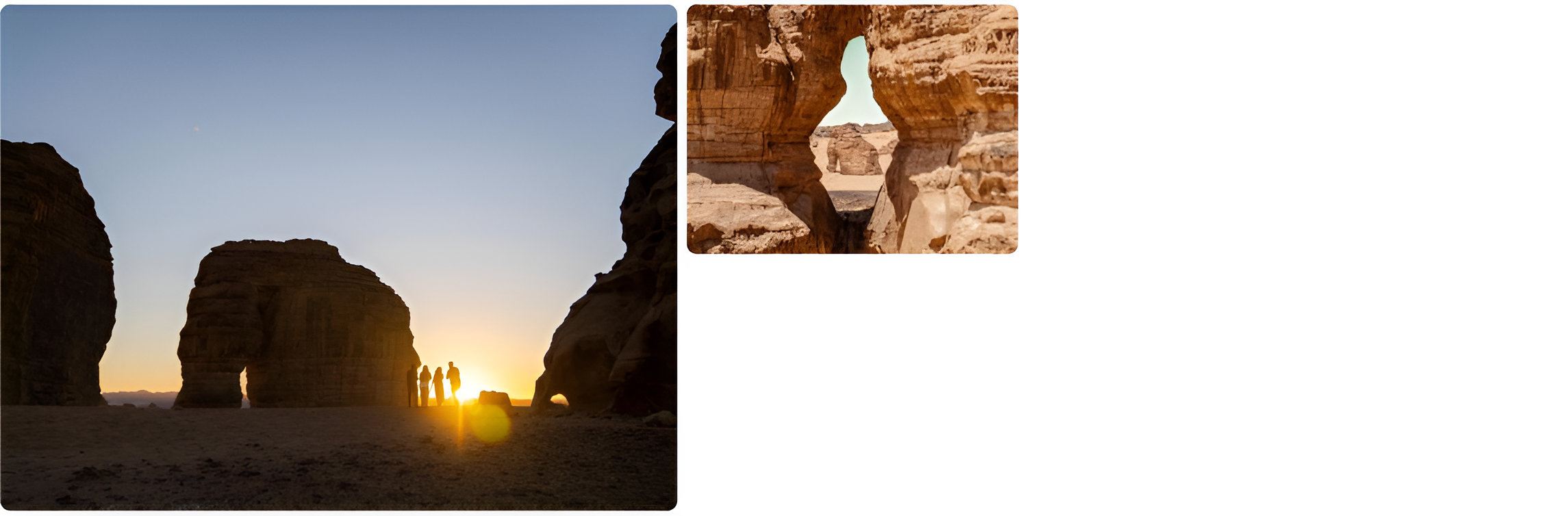
After we finish our tour we will take you to the Elephant Rock, also known as Jabal AlFil, one of AlUla’s many geological marvels. Unlike the ornate, hand-carved facades of nearby Hegra’s Nabataean tombs, the "trunk" and "body" of this monolithic red sandstone beast were hewn by natural forces — millions of years of wind and water erosion. The beauty of the unrefined structure is enhanced by its surroundings of a fine-sand sea studded with rocky outcrops, many of which are equally impressive in size and have interesting shapes and figures.
The area has very nice atmosphere with a cafe and restaurant, the seating area are build underground filled with magical lights that its just wonderful to witness the sunset
Elephant Rock
After we finish our tour we will take you to the Elephant Rock, also known as Jabal AlFil, one of AlUla’s many geological marvels. Unlike the ornate, hand-carved facades of nearby Hegra’s Nabataean tombs, the "trunk" and "body" of this monolithic red sandstone beast were hewn by natural forces — millions of years of wind and water erosion. The beauty of the unrefined structure is enhanced by its surroundings of a fine-sand sea studded with rocky outcrops, many of which are equally impressive in size and have interesting shapes and figures.
The area has very nice atmosphere with a cafe and restaurant, the seating area are build underground filled with magical lights that its just wonderful to witness the sunset
Elephant Rock
After we finish our tour we will take you to the Elephant Rock, also known as Jabal AlFil, one of AlUla’s many geological marvels. Unlike the ornate, hand-carved facades of nearby Hegra’s Nabataean tombs, the "trunk" and "body" of this monolithic red sandstone beast were hewn by natural forces — millions of years of wind and water erosion. The beauty of the unrefined structure is enhanced by its surroundings of a fine-sand sea studded with rocky outcrops, many of which are equally impressive in size and have interesting shapes and figures.
The area has very nice atmosphere with a cafe and restaurant, the seating area are build underground filled with magical lights that its just wonderful to witness the sunset
Old town tour
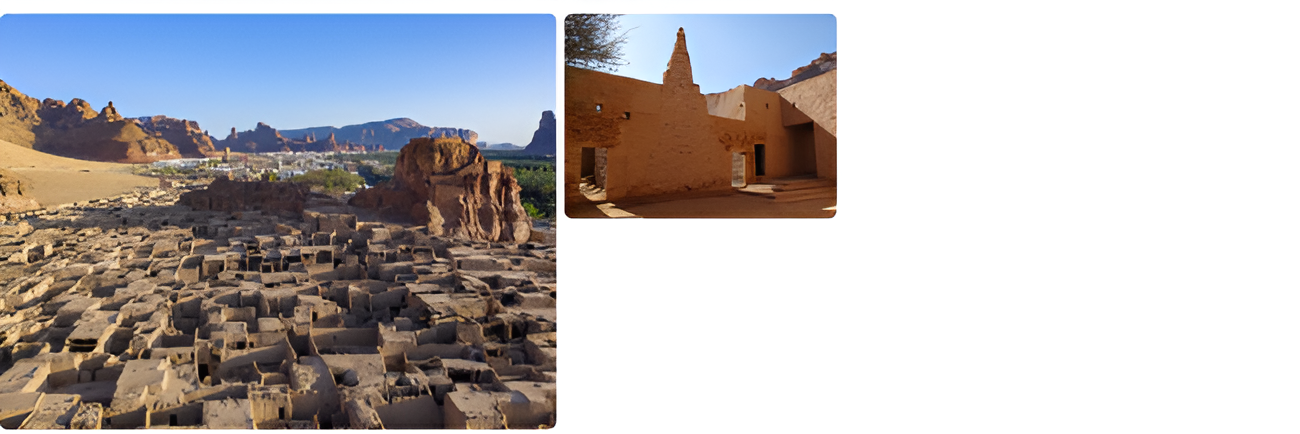
we are starting with the old town of Al Ula tour.
In the 12th century, AlUla Old Town became an essential settlement along the pilgrimage route from Damascus to Makkah. The city gradually replaced Qurh, to the south of AlUla, and is favourably mentioned by travellers from the 12th to the 20th centuries, when modern AlUla was constructed nearby. The houses were designed to be attached to one another, providing fortification, which hints to defence being a priority for the city's early inhabitants. At one point, the city was accessed by 14 gates, which were opened in the morning to welcome travellers, pilgrims and other visitors, and closed each evening. The ancient city’s recent occupation has enabled researchers to begin to gather oral histories, painting a picture of what life was like inside its walls. These stories will one day be available to visitors who can look forward to tapping into AlUla Old Town’s living memory.
 AlUla to Madinah (Google map)
3 hr 37 min (331 km)
Click here for Google Map
AlUla to Madinah (Google map)
3 hr 37 min (331 km)
Click here for Google Map
AlUla to Madinah (Google map)
3 hr 37 min (331 km)
Click here for Google Map
Madinah tour
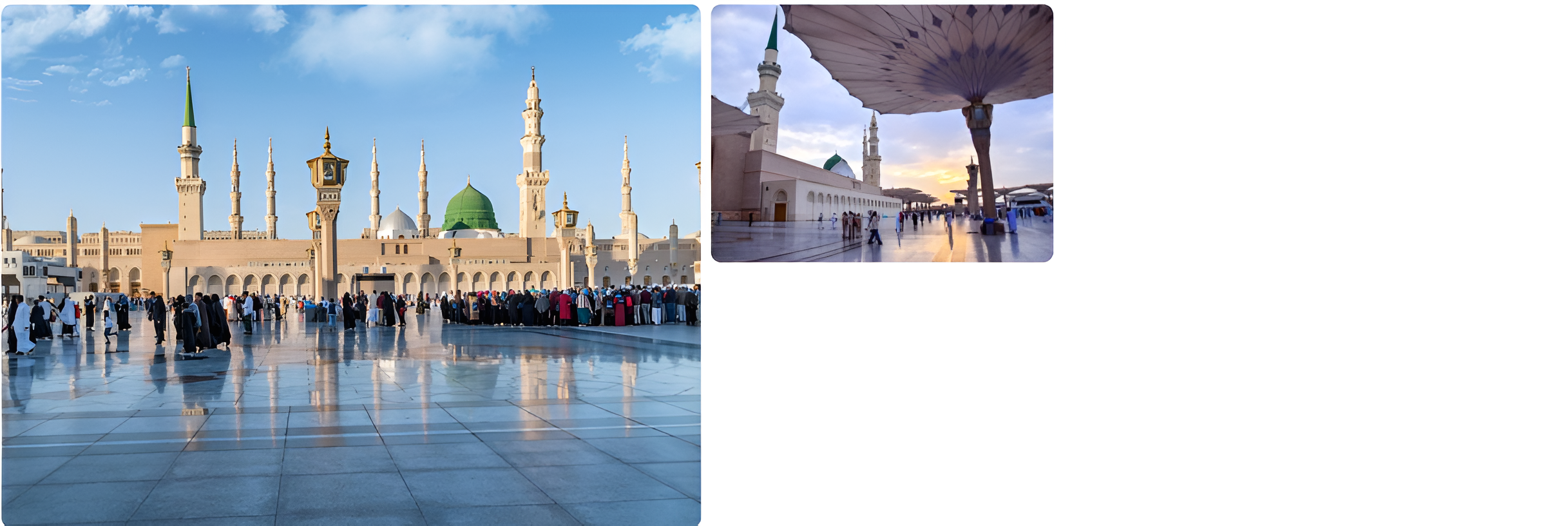
The first place visited is The Prophet mosque expansion exhibition which is located right in the area of the Holy Mosque where you can take pictures of it before we move to our next stop.
Next we will go to Qiba Street which connect two Mosques , the Holy Mosque and Qiba Mosque which both have significant importance in Islamic history in which the first was the house that prophet Mohammed lived and eventually it’s his grave visited by . The second was the first Mosque ever built. you will have a general overview how the city was built and shaped throughout the 1400 years.
(Both mosques will be visit from the outside only)
In the same street which is a nice pedestrian street for walking , there are many traditional food shops and snacks where will stop for our lunch break. After finishing our tour we will be heading to our hotel to spend the night and get some rest.
 Madinah to Jeddah (Google map)
4 hr 4 min (415 km)
Click here for Google Map
Madinah to Jeddah (Google map)
4 hr 4 min (415 km)
Click here for Google Map
Madinah to Jeddah (Google map)
4 hr 4 min (415 km)
Click here for Google Map
Jeddah - City tour
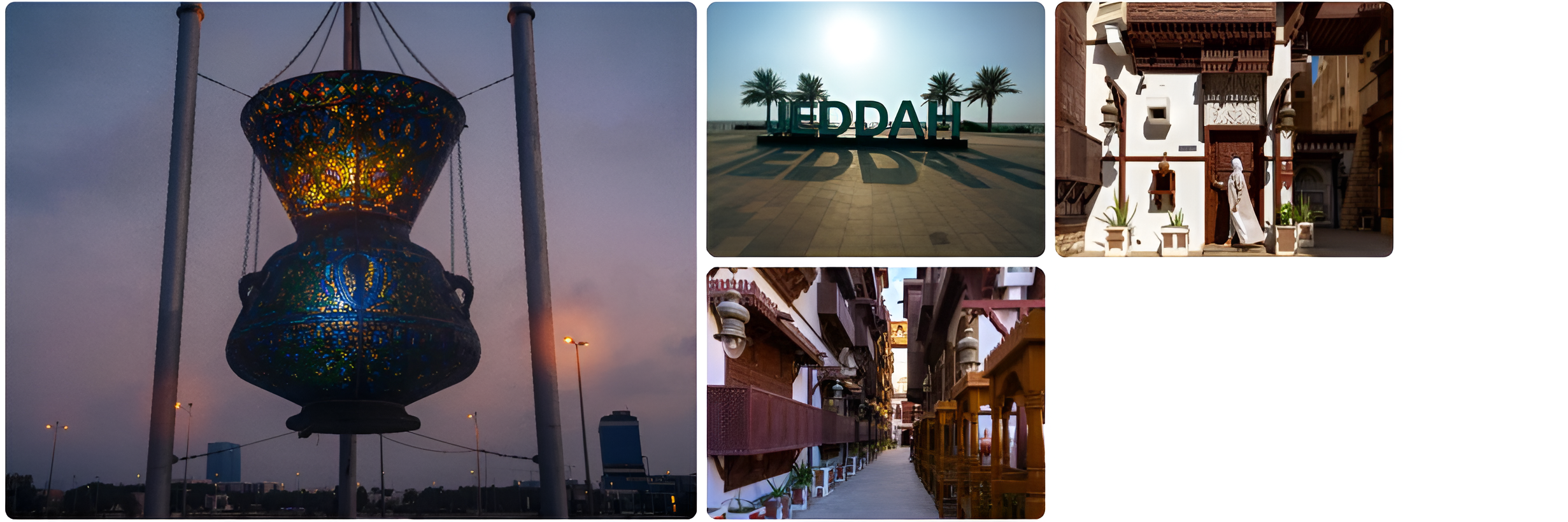
Today we will start our tour in the morning with a short stop at Jeddah Corniche and Jeddah water front before we go to our next stop at Tayebat Museum.
We will head now to The Tayebat Museum for a fascinating look into Jeddah’s long and cosmopolitan past, take an informative tour indeed the Tayebat Museum for a superbly curated representation of the city’s 2,500-year history. Located in the Al Faisaliyah district, the museum is housed in a multiroom complex that re-creates the traditional Hijazi ar hitecture of the old city, with bay windows overlaid with intricate wooden lattice work and ornate coral masonry.
With several floors of in-depth exhibits, the museum offers a living history lesson on the foundation of Jeddah, Saudi Arabia and the wider Arabian Peninsula. There is also an entire floor dedicated to the city’s rich Islamic heritage.
After our visit we will go to The house of Islamic arts, a museum specialized in Islamic arts. From the far countries of China and India to the farthest countries of the Maghreb and Andalusia of various arts, where the museum contains more than a thousand pieces of art representing 15 centuries of the history of Islamic art from all countries of the Islamic world
Before we move to the next tour we will have lunch we will suggest one of the local nice restaurants here in Jeddah that serves the famous traditional dishes in Jeddah.
Tayebat Museum Closed on Fridays.
 Al Balad Tour ( Jeddah Historical City )
You can explore and understand the country through its diverse and rich culture of food and people.
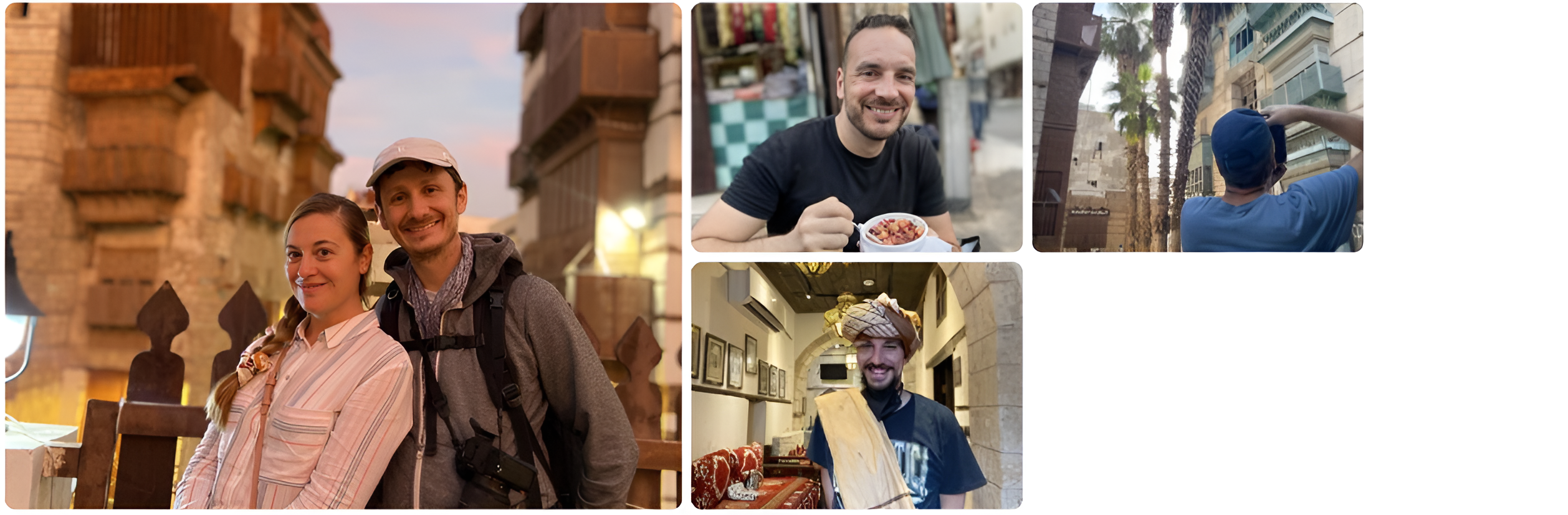
We will start our tour in Al Balad as local call it which means “ the town” as reference to the base of Jeddah. Al-Balad was founded in the 7th century and historically served as the centre of Jeddah. Al-Balad's defensive walls were torn down in the 1940s. In the 1970s and 1980s, when Jeddah began to become wealthier due to the oil boom, many Jeddawis moved north, away from Al-Balad Al Balad is registered as a world heritage UNISCO site and since then the old buildings with its unique window designs and doors are being preserved along with its unique buildings which some have been built using sea shells and stones !. The old buildings once housed the famous Jeddah families and hosted the founder the late King Abdulaziz when first entered Jeddah. Our tour will go through the history of these building including going inside one of the buildings to see the interior designs , furniture and life back then Will also explain the historical importance of some sites and locations while we wonder around the narrow streets to explain how merchants used to sell their goods and how pilgrims used to get their supplies of cloth and food before they head to Makkah through the Makkah Gate in Al Balad.
The old Mosques is another tourist attraction where some were founded over 300 years ago and still functional as a mosque. The main attraction in this tour is the food and snacks of Al Balad where we will pass by some famous vendors known to offer the best local snacks such as the local drink made of bread “ Sobia” and the old bakery which its famous for its fresh bread. Another local snack that consist of Bean and pickles “ Balilah”. We will stop for rest in one of the local coffee open air places and try famous local tea mixed with milk and herbs We will move to visit the center of Al Balad to see the first hotel built in Jeddah influenced by Italian architecture then pass by the first school built in Saudi. We will also visit one of the art houses and museum offering its unique local art collection and antiques.
Al Balad Tour ( Jeddah Historical City )
You can explore and understand the country through its diverse and rich culture of food and people.
We will start our tour in Al Balad as local call it which means “ the town” as reference to the base of Jeddah. Al-Balad was founded in the 7th century and historically served as the centre of Jeddah. Al-Balad's defensive walls were torn down in the 1940s. In the 1970s and 1980s, when Jeddah began to become wealthier due to the oil boom, many Jeddawis moved north, away from Al-Balad Al Balad is registered as a world heritage UNISCO site and since then the old buildings with its unique window designs and doors are being preserved along with its unique buildings which some have been built using sea shells and stones !. The old buildings once housed the famous Jeddah families and hosted the founder the late King Abdulaziz when first entered Jeddah. Our tour will go through the history of these building including going inside one of the buildings to see the interior designs , furniture and life back then Will also explain the historical importance of some sites and locations while we wonder around the narrow streets to explain how merchants used to sell their goods and how pilgrims used to get their supplies of cloth and food before they head to Makkah through the Makkah Gate in Al Balad.
The old Mosques is another tourist attraction where some were founded over 300 years ago and still functional as a mosque. The main attraction in this tour is the food and snacks of Al Balad where we will pass by some famous vendors known to offer the best local snacks such as the local drink made of bread “ Sobia” and the old bakery which its famous for its fresh bread. Another local snack that consist of Bean and pickles “ Balilah”. We will stop for rest in one of the local coffee open air places and try famous local tea mixed with milk and herbs We will move to visit the center of Al Balad to see the first hotel built in Jeddah influenced by Italian architecture then pass by the first school built in Saudi. We will also visit one of the art houses and museum offering its unique local art collection and antiques.
Al Balad Tour ( Jeddah Historical City )
You can explore and understand the country through its diverse and rich culture of food and people.
We will start our tour in Al Balad as local call it which means “ the town” as reference to the base of Jeddah. Al-Balad was founded in the 7th century and historically served as the centre of Jeddah. Al-Balad's defensive walls were torn down in the 1940s. In the 1970s and 1980s, when Jeddah began to become wealthier due to the oil boom, many Jeddawis moved north, away from Al-Balad Al Balad is registered as a world heritage UNISCO site and since then the old buildings with its unique window designs and doors are being preserved along with its unique buildings which some have been built using sea shells and stones !. The old buildings once housed the famous Jeddah families and hosted the founder the late King Abdulaziz when first entered Jeddah. Our tour will go through the history of these building including going inside one of the buildings to see the interior designs , furniture and life back then Will also explain the historical importance of some sites and locations while we wonder around the narrow streets to explain how merchants used to sell their goods and how pilgrims used to get their supplies of cloth and food before they head to Makkah through the Makkah Gate in Al Balad.
The old Mosques is another tourist attraction where some were founded over 300 years ago and still functional as a mosque. The main attraction in this tour is the food and snacks of Al Balad where we will pass by some famous vendors known to offer the best local snacks such as the local drink made of bread “ Sobia” and the old bakery which its famous for its fresh bread. Another local snack that consist of Bean and pickles “ Balilah”. We will stop for rest in one of the local coffee open air places and try famous local tea mixed with milk and herbs We will move to visit the center of Al Balad to see the first hotel built in Jeddah influenced by Italian architecture then pass by the first school built in Saudi. We will also visit one of the art houses and museum offering its unique local art collection and antiques.
Free day in Jeddah
Boat trip - swimming and snorkeling (Optional)
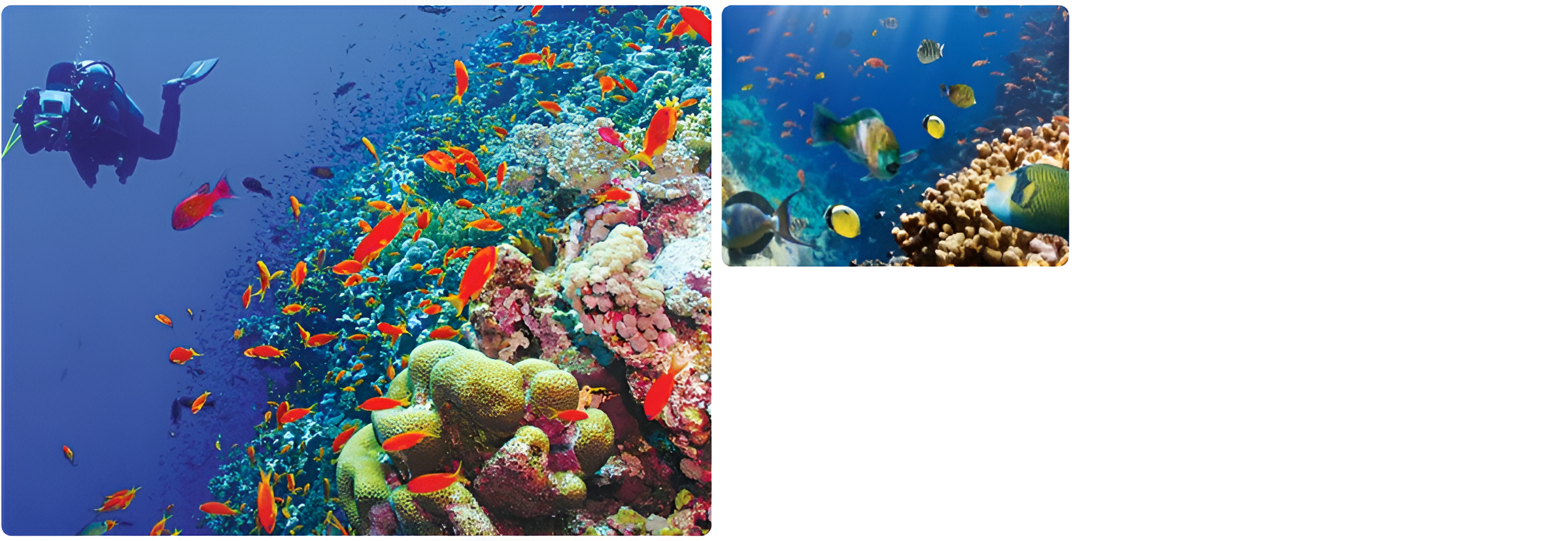
Jeddah is known to have one of the best corals around the world. For the last day, we will be spending the day on a boat cruising around the Red Sea. Doing all water activities like snorkeling, swimming, tanning and having a snacks on the boat.
Departure
Today where we say goodbye , we will be dropping you off to the airport according to your flight schedule